11 Books That Inspired Benny Peterson’s ‘The Maidenheads’
“The Maidenheads” is out now from Penguin Random House.
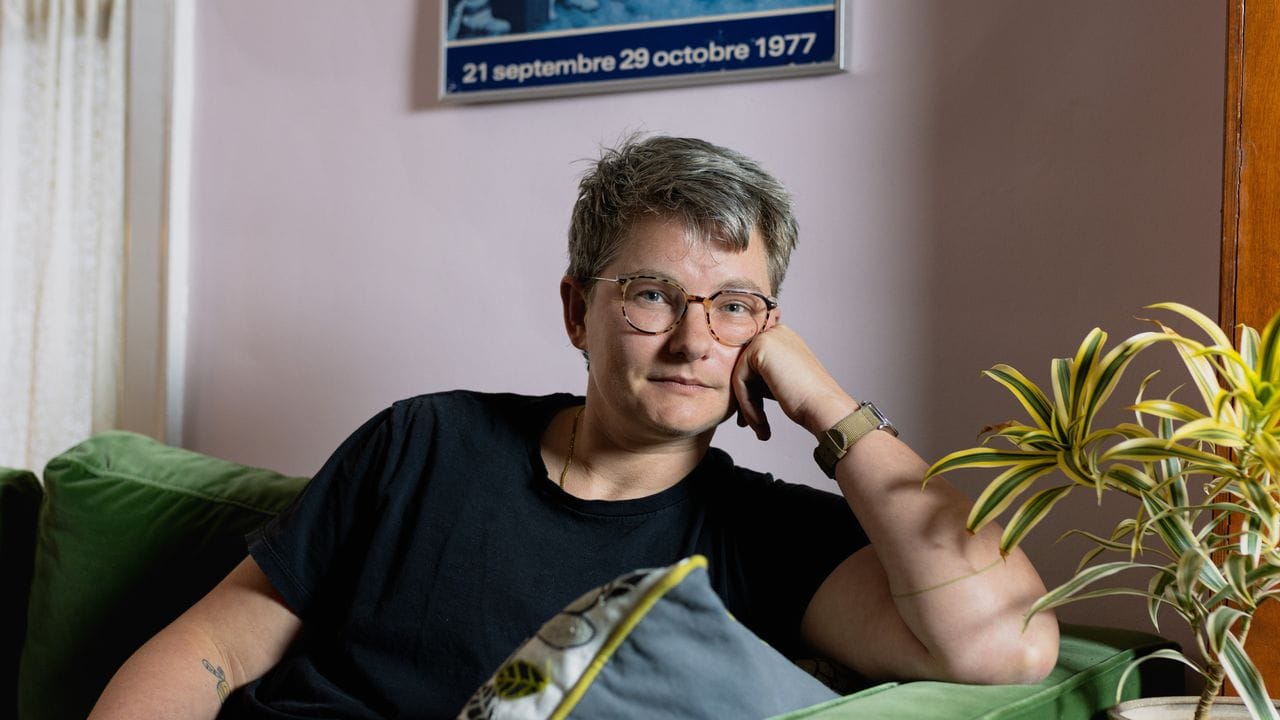
Reported by Vogue.
A novel about D.C. punk, queer identity, and the wreckage of revived teenage romance sounds like a very specific niche — and it is. But Benny Peterson's The Maidenheads, out now from Penguin Random House, earns its particularity. Set largely in 2012 and steeped in the legacy of Fugazi, Riot Grrrl, and the D.C. hardcore scene, it's a beautifully illustrated, unapologetically queer debut that Peterson built, in part, from an obsessive reading life. According to Vogue, Peterson recently laid out the eleven books that shaped the novel — and the list is its own kind of syllabus.
The foundational texts are '90s classics about girlhood and its discontents. Blake Nelson's Girl (1994) — about a lonely Pacific Northwest teenager who finds herself, and a complicated first love, in the Portland punk scene — Peterson describes having read "a dozen times in high school," and its raw immediacy is a clear structural ancestor to The Maidenheads. Brock Cole's Celine (1989) made the list for a different reason: its protagonist's unshakeable confidence in her own artistic identity, something Peterson found almost radical as a young person full of doubt. That tension between self-belief and self-questioning became central to how Peterson conceptualized the novel's two leads.
The Reading That Rewired the Writing
Partway through drafting The Maidenheads, Peterson transitioned — and realized the narrator, Jamie, was gender nonconforming. Two books proved essential in navigating how to render dysphoria and nonbinary identity through a character who has no language for it yet. James Frankie Thomas's Idlewild, set in a Manhattan progressive high school in 2001-02, does exactly this: one of its protagonists is transparently a gay trans man who nonetheless lacks any framework to understand himself. Andrea Lawlor's Paul Takes the Form of a Modern Girl — a shape-shifting odyssey through queer spaces and bodies — cracked open, for Peterson, the generative instability of gender language entirely. Carrie Brownstein's memoir Hunger Makes Me a Modern Girl got read on two tracks simultaneously: as a meditation on becoming a rock star, and as research into what it actually feels like to make music with your ex.
For D.C. specificity, Peterson leaned on Dance of Days by Mark Andersen and Mark Jenkins — an insider history of the capital's punk and hardcore scene — and Edward P. Jones's short story collections Lost in the City and All Aunt Hagar's Children, which Peterson credits for a granular geographical precision: characters living and working at real addresses, real intersections, on a city you can actually map. Raven Leilani's Luster informed how to write a narrator who is maddening and magnetic in equal measure. And for the ending — deliberately open, deliberately unresolved — Peterson typed out the final two pages of Torrey Peters's Detransition, Baby by hand, trying to reverse-engineer the trick. Still couldn't figure it out.
The most compelling reading lists aren't recommendations — they're confessions, and Peterson's is a portrait of a writer built from everyone they've ever loved on the page.
Read the original at Vogue.