A New Book Explores the Unique Relationship Between Tennis and Fashion
From René Lacoste to Coco Gauff, ACE: The Times & Style of Tennis is a timely exploration of how the on-court fashion has permeated culture.
Reported by Vogue.
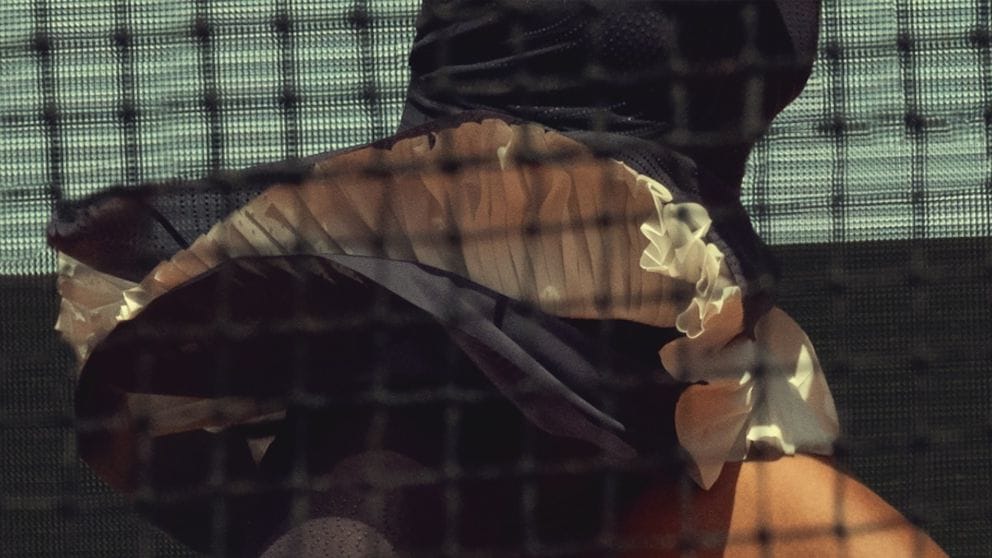
Long before Serena's catsuits or Coco Gauff's Miu Miu partnership, there was Suzanne Lenglen — La Divina — a French tennis champion who blew up the sport's dress code before anyone thought to call it that. Six Wimbledon titles, eight Grand Slam singles wins, an undefeated doubles record with partner Elizabeth Ryan: her athletic résumé alone was staggering. But in 1919, she walked onto Wimbledon's grass in a Jean Patou-designed silk jersey dress — sleeveless, drop-waisted, accordion-pleated — and quietly dismantled the expectation that women should compete in full-length skirts and corsets. Patou's sales spiked. This very magazine praised the design's "freedom, appropriateness, and excellence of its simple lines," according to Vogue.
That moment is where author Sunita Kumar Nair begins building her case in ACE: The Times & Style of Tennis (Abrams, June 2) — that tennis is, categorically, the most stylish sport. "There's this constant parallelism going on between society and tennis athletes," Nair says. "Tennis as a sport is so reflective of the time." She traces the lineage from Lenglen's Patou to Chanel's Le Coin des Sports at her Deauville boutique to Lacoste's ubiquitous alligator patch, arguing that the sport's aesthetic has always bled far beyond anyone who's actually held a racket.
Power, Class, and the Politics of White
Tennis whites, Nair points out, were never just a dress code — they were a class signal. Keeping whites pristine was genuinely expensive in the early 1900s, which made the uniform an immediate marker of social standing. That legacy persists: Wimbledon's all-white rule remains intact, a last vestige of the sport's upper-crust origins, and the same institution that policed Serena Williams' black Nike catsuit at the 2018 French Open — her triumphant post-pregnancy return — is still setting the terms. The tension between rule and rebellion, Nair argues, is exactly what makes tennis a goldmine for brands. "There's no contact in the sport, and you are looking at this player for two to five hours," she notes. "It's a catwalk." Sabalenka courtside with her Gucci bag. Agassi in spandex with rock-and-roll hair. The formula has always been part performance, part provocation.
Nair — whose 2023 book CBK decoded Carolyn Bessette Kennedy's style mythology — organized ACE not by timeline but by temperament: The Classic, The Mavericks, The Cool. Subchapters range from designers (Ralph Lauren, Yohji Yamamoto, Tory Burch) to specific items — skirts, sweaters, watches, tattoos — to individual players including Agassi, Osaka, and Nadal. Her throughline is that tennis, as a sport of the individual rather than the team, has always rewarded nonconformity. That's why civilians buy in too. "It's like getting a swatch of their superpowers," she says of the sport's crossover appeal. "It empowers people."
What Nair has written is less a history book than a cultural argument: that every short hem, every neon flash, every banned silhouette is a thread in something larger — a tapestry of bodies, ambition, and the clothes we use to telegraph both.
Read the original at Vogue.