A To-Do List for Marc Jacobs’s New Owner
WHP Global is the new owner of Marc Jacobs, alongside G-III Apparel Group. We lay out the priorities to nurture the Marc Jacobs brand.
Reported by Vogue.
LVMH just sold its majority stake in Marc Jacobs to brand management group WHP Global — and the deal is either a turning point or a cautionary tale, depending entirely on what happens next. G-III Apparel Group, the company that bought Donna Karan from LVMH back in 2016, is co-owning the brand with WHP: G-III handles retail operations and wholesale (its investment sits at roughly $500 million), while WHP manages licensing. Marc Jacobs himself stays on as founder and creative director, which is both the deal's greatest asset and its most delicate variable, according to Vogue.
WHP has been quietly assembling a fashion portfolio — Rag & Bone, Vera Wang, Joe's Jeans — but Marc Jacobs is by far the most culturally weighted acquisition it has ever made. The structure mirrors WHP's Rag & Bone playbook, where Guess Inc. handled the operational side while WHP ran licensing. Neil Saunders, managing director of Globaldata's retail division, sees G-III's premium and luxury experience as a meaningful advantage. Fashion consultant Julie Gilhart, who spent 18 years as SVP and fashion director at Barneys, is bullish: "His name is global, but his heart is in New York."
The Fragmentation Problem
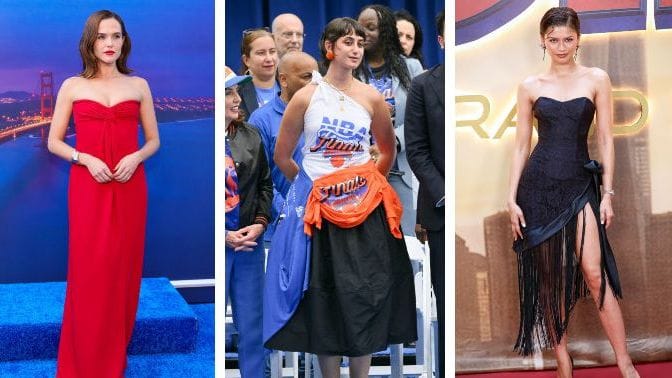
Right now, Marc Jacobs exists as several brands in one body — and they barely speak to each other. The runway show, always a late-season event at the Park Avenue Armory or the New York Public Library, remains a coveted ticket, but those clothes almost never make it into the real world outside of a celebrity or a Met Gala red carpet. (This year, the brand dressed Serena Williams, Cardi B, and Rachel Sennott.) Meanwhile, accessories are widely distributed and aggressively priced down, Heaven by Marc Jacobs has cooled after an early Gen Z frenzy, and the fragrance and eyewear licenses operate in their own orbits. Marc Jacobs Beauty is officially making a comeback — confirmed by Jacobs himself in his Instagram post about the sale — but it's entering a brand ecosystem that still needs a spine. Saunders is direct: "The Marc Jacobs brand is too fragmented in terms of the products it offers, its distribution, and its position in the market. That inhibits growth and it reduces impact." The fix isn't leveling everything down to one aesthetic — it's building what one expert calls "stronger narrative alignment through shared design codes, synchronized campaigns, and clearer aesthetic continuity."
On price point, analyst consensus is firm: Marc Jacobs belongs at accessible luxury, above Coach but below the stratosphere where consumers are already exhausted. Bernstein luxury analyst Luca Solca puts it plainly — the brand should rival Michael Kors. But that doesn't mean chasing volume. The risk, as Saunders sees it, is ubiquity: flooding the market with disconnected product rather than building a range that lets consumers genuinely buy into a coherent world. The brand's 280-plus stores across 60 countries give WHP and G-III real infrastructure to work with — but runway-level ready-to-wear is currently exclusive to Bergdorf Goodman, leaving obvious room to grow if Jacobs keeps designing clothes with actual wearability in mind. His most recent show had designer Anna Sui reportedly exclaiming: "Clothes we can wear." That's not a small thing.
The new owners inherited one of American fashion's most singular creative legacies — and their only job now is to make sure the next generation knows exactly why that matters.
Read the original at Vogue.