A Visit to The Broad’s Engaging New Yoko Ono Exhibition
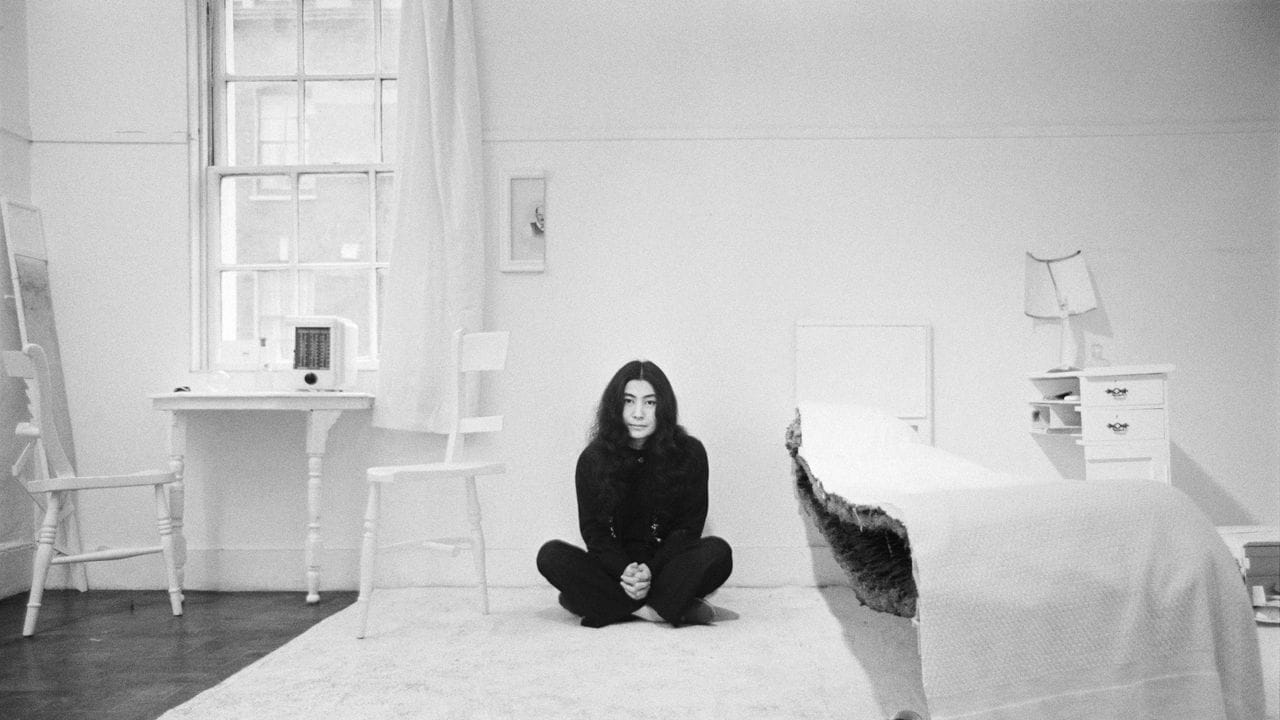
Running through October 11, “Yoko Ono: Music of the Mind” is the artist, musician, and activist’s first solo museum exhibition in Southern California and surveys much of Ono’s early work, spanning conceptual art, music, film, installation, instruction pieces,…
Reported by Vogue.
In 1971, Yoko Ono took out ads in New York newspapers announcing a solo exhibition at MoMA. Visitors who showed up found only a small sign explaining that Ono had released flies onto the museum grounds — and an invitation to follow them through the city. Cameramen positioned around the building captured their reactions. Some performed enthusiasm for a show that didn't exist. Others tried to intellectualize it. One called her "bonkers." But a child, asked whether the exhibition might exist only in his imagination, broke into a grin: "Then you have a very good museum there. That's real neato." That clip, grainy and undeniable, now anchors "Yoko Ono: Music of the Mind" at The Broad in Los Angeles — and it tells you everything about why this show matters.
Running through October 11, the exhibition is Ono's first solo museum show in Southern California, according to Vogue, spanning conceptual art, performance, film, instruction works, and activism across six decades. It arrives at a moment of serious cultural reckoning: the woman long flattened into either an avant-garde punchline or "the one who broke up The Beatles" is finally being recognized as one of the foundational architects of conceptual and performance art. Connor Monahan, her studio director of nearly two decades, is characteristically direct about her staying power: "Many people, if they received that kind of public criticism, wouldn't continue to make more work. But she was never broken by that."
Imagination as Survival, Then as Art
Ono's relationship with imagination runs deeper than artistic philosophy — it's biographical. At 12, evacuated from Tokyo during World War II, she and her younger brother would lie in the Japanese countryside and invent elaborate imaginary meals together, trading what she called "menus in the air." Sarah Loyer, curator and exhibitions manager at The Broad, describes those exchanges as "a belief in one's imagination as a mode of survival." Ono later counted them among her first artworks. That context reframes everything in the galleries: the match you watch burn out in Lighting Piece (1955), the original typescripts from her 1964 book Grapefruit — which instructed readers to "Listen to the sound of the earth turning" and simply "Fly" — and the participatory nail-hammering canvas whose every strike booms through the room and startles strangers into joining in.
The show is relentlessly physical. Before you're even inside, you're tying paper wishes onto olive trees in the museum plaza. Inside, you can climb into an enormous black fabric sack and shuffle across a white platform, your silhouette a living Rorschach. You can reach into suspended WWII German helmets and pull out sky-patterned puzzle pieces to keep. Add Color (Refugee Boat) — a white boat in an all-white room — has absorbed new grief with every passing crisis, from Syria to Ukraine to Gaza, its walls now covered in calls to abolish ICE, multilingual peace messages, hand-drawn waves. "All of her work is unfinished," Monahan says. "Continually changing and evolving through time." Come back in two weeks and it will literally be a different show.
The Lennon chapter is present but not centered — he wandered into her London gallery in 1966, climbed a ladder, peered through a magnifying glass at a tiny word on the ceiling (YES), then bit into an apple she'd made as art. "I turned pale," she later recalled. "I thought, how dare this guy do that to my work." Their partnership weaponized celebrity for anti-war activism, but it also warped how the world saw her — obscuring albums that now read as direct ancestors of punk, riot grrrl, and no wave. The misreading was always the point of resistance.
Ono's work has always understood that imagination isn't decoration — it's the infrastructure that keeps people human when everything else has been stripped away.
Read the original at Vogue.