“Bette Davis Putting On Cold Cream In Front of a Makeup Mirror Is Everything to Me”—Rebecca Hall On Her Teen Idols
The Listeners’s actress, answers Bazaar’s “First, Now, Next” Questionnaire
Reported by Harper's Bazaar.
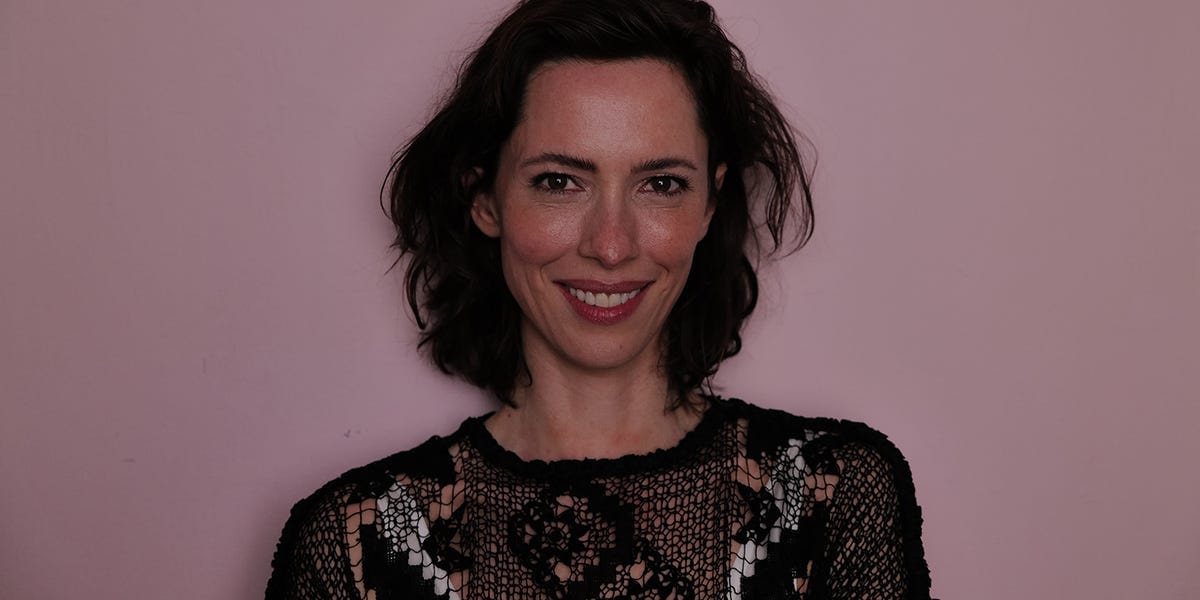
There's a particular kind of actress who makes you trust a project before you've read a single review. Rebecca Hall is that actress. Currently starring in Starz's The Listeners — a five-part series directed by Janicza Bravo, based on Jordan Tannahill's novel, about a woman undone by a mysterious hum only she can hear — Hall is also set to reunite with director Ira Sachs in The Man I Love, opposite Rami Malek as a theater actor living with AIDS in 1980s New York. Two projects, wildly different registers, both unmistakably hers. That's not an accident.
According to Harper's Bazaar, Hall traces her artistic sensibility back to an obsession with All About Eve at age nine — specifically Bette Davis cold-creaming her face in front of a makeup mirror, surrounded by theatrical adults with operatic personalities. Her adolescent icons were Barbara Stanwyck, Gena Rowlands, and Bette Davis: women whose careers couldn't be replicated, only admired. The lesson she took from them wasn't a blueprint, it was a vibe. "You make your own path." And she has — quietly, stubbornly, brilliantly — even when it's annoyed the hell out of her.
The Anti-Establishment Artist Who Stayed That Way
At 16, Hall was deep in late-'90s counterculture logic: the more obscure your taste, the more serious your integrity. Mainstream success was suspect. That framework shaped a career that has always sat slightly outside the center — important work, discerning choices, never quite blockbuster. She's made peace with it, mostly. What's shifted isn't her standards but her rigidity: she no longer filters opportunities through an underground-versus-mainstream binary. The question now is simply whether she wants to do it. That, she says, is the artist she always wanted to become.
On rejection — which she estimates accounts for 90% of the artistic experience — she's characteristically direct: extreme bitterness, alcohol, and voodoo dolls, followed by 24 hours of misery, then the garden, then a painting, then forward. Directing has helped. Once you understand that casting isn't personal so much as it is a director's vision materializing, the nos land differently. Though she's quick to add: there are far more nos than anyone on the outside ever sees, and she suspects plenty of genuinely talented people quit because that part was simply unbearable.
The Listeners is, by her own description, the most politically resonant thing she's made — though she resists spelling out exactly why, leaving that to the audience. What she will say: it's a portrait of how beliefs calcify in isolation, inside echo chambers, without reality checks from the people around us. A woman hears a noise no one else can hear, and the world slowly stops believing her. In 2025, that metaphor doesn't need much explaining. She calls it potent. That might be underselling it.
The woman who once wanted to be an underground quiet force built exactly that career — and is only now, from a position of real strength, letting a little more light in.
Read the original at Harper's Bazaar.