Can Love Be a Photograph? For Inez and Vinoodh, the Answer Is Yes
A retrospective of the photographers’ work is on view at the Kunstmuseum Den Haag until September
Reported by Harper's Bazaar.
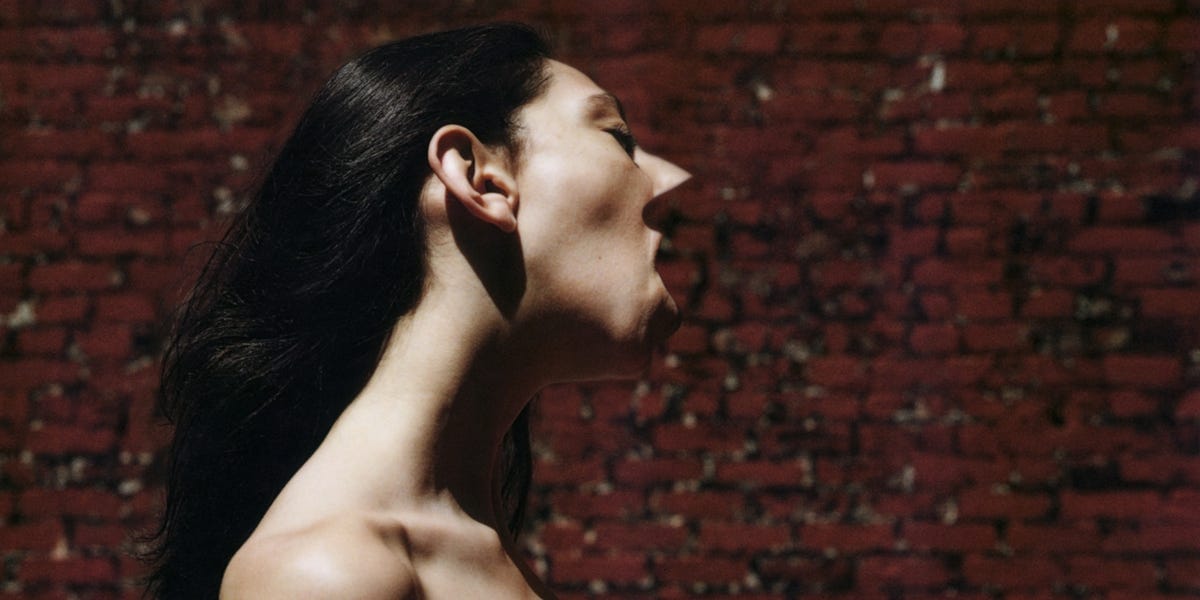
There is a particular kind of photograph that stops you mid-scroll, mid-stride, mid-breath. Christy Turlington balanced on a tree branch with a shadow that behaves like an open wound. Rihanna, Lady Gaga, Taylor Swift — people you've clocked a thousand times — suddenly unfamiliar, suddenly soft. A pre-death Prince, simultaneously regal and saint-like. These images belong to Inez Van Lamsweerde and Vinoodh Matadin, the Dutch duo who have spent four decades making fashion photography feel like a lucid dream you're not entirely sure you want to wake from.
A retrospective now on view at the Kunstmuseum Den Haag in the Netherlands — titled "Can Love Be a Photograph?" — gathers that lifetime of work into what amounts to an immersive argument: yes, love can be a photograph, especially when the photographers are also each other's partners. According to Harper's Bazaar, Inez describes their process as "heightening" a subject to "this ultimate version of themselves," a kind of projection that requires genuine openness on both sides. "We're always moved by the fact that someone opens up to us that way," she says, "even when it's 15 minutes with a celebrity." That intimacy isn't accidental — it's architectural.
Two Cameras, One Moment
The technical scaffolding behind the magic started with a happy accident. Early in their careers, during a Harper's Bazaar shoot with Charlotte Gainsbourg, Vinoodh picked up a spare camera Inez didn't feel like testing. The results cracked something open. Shooting simultaneously — two sets of eyes, two brains, two frames of the same split second — became their permanent practice, reducing pressure while multiplying possibility. Their image manipulation has roots equally accidental: a 1991 calendar commission in Holland where rain wrecked an outdoor shoot led them to composite studio-shot models into sunny location photographs using a Quantel Paintbox, years before Photoshop existed. The resulting "hyperrealist strangeness," as Inez calls it — that unnatural sharpness in both foreground and background — became a signature aesthetic and, quietly, a philosophical position. "Already by lifting your camera and framing, you're already manipulating the truth," Inez says. They were simply honest about it.
That honesty extends to their pointed skepticism of AI. Where digital manipulation in their work was always grounded in physical presence — the energy on set, the collaboration, the actual human being standing in front of the lens — AI removes exactly what they consider essential. "When you know it's AI, it's a joke," Vinoodh says flatly. "Our whole thing was that in our image you never know what's the real and what's the unreal." Inez is equally direct: typing prompts into a computer is simply not their life. The exhibition makes this tension visible in the most analog way possible — 200 test Polaroids, raw and unretouched, which have reportedly become one of the show's most beloved rooms. "There is this hunger for what is real in humans," Vinoodh observes, and he's not wrong.
In an industry currently contorting itself around questions of authenticity and artificial generation, Inez and Vinoodh's career reads less like nostalgia and more like a blueprint: the image only means something if the exchange behind it did, too.
Read the original at Harper's Bazaar.