Ellie Sachs on Working With David Cross In Her Debut Film and “That NYC Cockroach Resilience”
Lucy Schulman will premiere at this year’s Tribeca Film Festival
Reported by Harper's Bazaar.
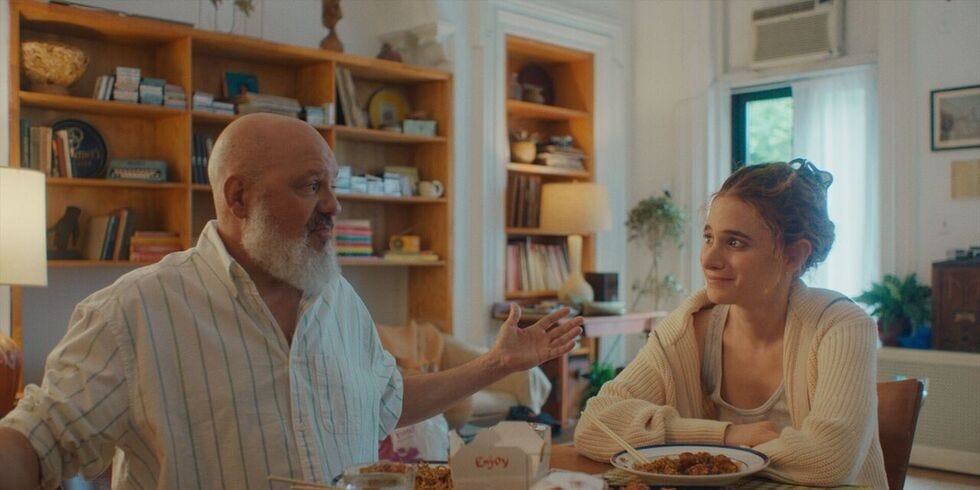
There's a scene early in Lucy Schulman that quietly announces what kind of film this is going to be: Lucy, played by writer-director Ellie Sachs, watches her dad agonize over whether to open a message with "Hi" or "Hey" — while she, at 12, is paralyzed by the exact same dilemma over a middle-school crush. The joke lands, then lingers. Nothing really changes. Ever. That's not a punchline. That's the thesis.
Sachs's debut feature — which she wrote, directed, and stars in — drops viewers directly into the turbulence of a late-twentysomething New York life. Lucy's boyfriend (played by Hasan Minhaj) is cheating on her. Her friendships are fraying. Her career is aspirational at best. And her relationship with her father, Peter, played by David Cross, is warm, funny, and quietly suffocating. According to Harper's Bazaar, Sachs began drafting the script in the aftermath of a real breakup — "a form of therapy," she says — but insists Lucy is less autobiography than "amalgam": an avatar for the messy, underestimated young woman who moves through life treating herself like a supporting character in someone else's story.
The NYC Cockroach Resilience
The film's feminist undercurrent isn't loud about itself, which is exactly the point. Sachs drew from a canon of quietly radical New York cinema — Claudia Weill's Girlfriends, Joan Micklin Silver's Crossing Delancey, and the 1978 feminist landmark An Unmarried Woman — for their texture and pacing, that feeling of being dropped into a woman's actual life mid-sentence. Lucy isn't redeemed by a relationship or a revelation. She's redeemed by iteration: making bad calls, standing up her best friend at a bridal shower, going home too often, and then — slowly — doing a little better. "That NYC cockroach resilience," as Sachs puts it: not glamorous, entirely real.
The father-daughter dynamic is where the film gets its emotional specificity. Cross, who came aboard after Sachs sent him what she describes as a "heartfelt, kooky, warm letter" and met her at the now-closed Cafe Gitane, brings his signature comedic energy to Peter — a man who is too enmeshed in his daughter's life and fully lovable anyway. Sachs, who counts herself as genuinely close with her own parents, wanted to sit in that gray area: the ways that deep family love can also be a trap, and how untangling yourself from it isn't a betrayal. It's just growing up.
If Lucy Schulman has a fashion sensibility — and it does, because New York women always do — it's the aesthetic of controlled chaos: a woman who knows what she wants and keeps getting it slightly wrong on the way there, but never stops showing up. That's not a flaw. That's a whole personality. The most compelling women on screen right now aren't the ones who have it figured out — they're the ones who refuse to stop trying.
Read the original at Harper's Bazaar.