George Saunders Never Gives Up on a Character
The novelist and short story writer always wants to dig deeper
Reported by Harper's Bazaar.
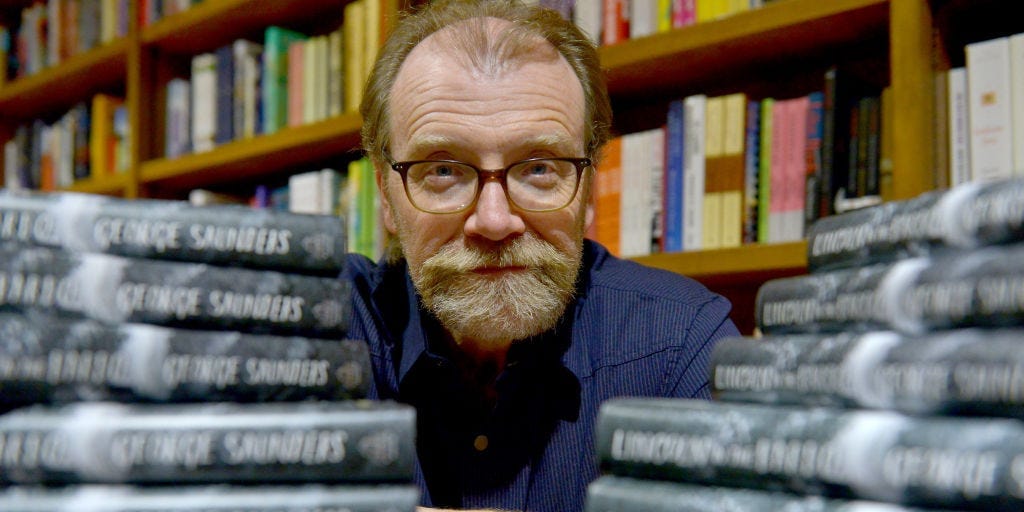
The novel is dying. Readers are disappearing. Fiction is obsolete. If you've been online in the last decade, you've heard some version of this eulogy — and according to Harper's Bazaar, author George Saunders has heard it too. His response, essentially: keep writing anyway, and write better.
Saunders, whose story collections CivilWarLand in Bad Decline and Tenth of December and novels Lincoln in the Bardo and the recent Vigil have built him a reputation as one of American fiction's most vital voices, isn't dismissing the concern. He acknowledges the alarm raised in James Marriott's The New Dark Ages: The Death of Reading and the Dawn of the Post-Literate Society. But his prescription isn't panic — it's craft. Stay literate. Put that literacy on the page. Trust that readers who want complexity will find it. Prose, he argues, remains the best container we have for wit, ambiguity, and rigorous thinking. That's not nostalgia. That's a position.
The Work of Actually Seeing People
What's striking about Saunders isn't just his output — it's his process, which is essentially an ongoing argument against contempt. He admits his first drafts tend toward cartoon cruelty, cheap shots at characters he hasn't bothered to understand yet. The fix isn't empathy as a feeling; it's empathy as a writing technique. He drills down — "How so?" "Tell me more" — until a flat villain becomes a person with a mother he's just snapped at and a girlfriend he actually adores. The character doesn't soften so much as complicate, and complication, Saunders insists, is where reader interest lives. His rule of thumb: the time to give up on a person is never.
The same philosophy extends to humor, which Saunders treats not as a tone to perform but as a byproduct of precision. He doesn't try to be funny — he tries to revise sentences until they become more truthful, and truth, compressed and efficient, often turns out to be hilarious. Humor, in his framework, is a subcategory of wit, and wit means being fully present with the reader, anticipating what she'll find delightful before she knows it herself. On endings — famously brutal — his loose mantra is "always be escalating," which should apply to every last line. The goal: stop without sucking.
On internet language and its relentless churn — "looksmaxxing" being his offered example of a word that arrives already half-obsolete — Saunders is cheerfully resistant. He'll let slang age before trusting it on the page, aware that a character who speaks in the vernacular of the moment is essentially autochronostamping himself, as Saunders jokes. The internet moves fast; good sentences don't have to.
The throughline in everything Saunders describes is the same: keep looking deeper, keep asking more, never settle for the broad stroke when the specific one is right there waiting.
Read the original at Harper's Bazaar.