How Aleshea Harris Took ‘Is God Is’ From Stage to Screen
“It was baptism by fire,” the Pulitzer Prize finalist says of writing and directing her play’s new film adaptation, out May 15.
Reported by Vogue.
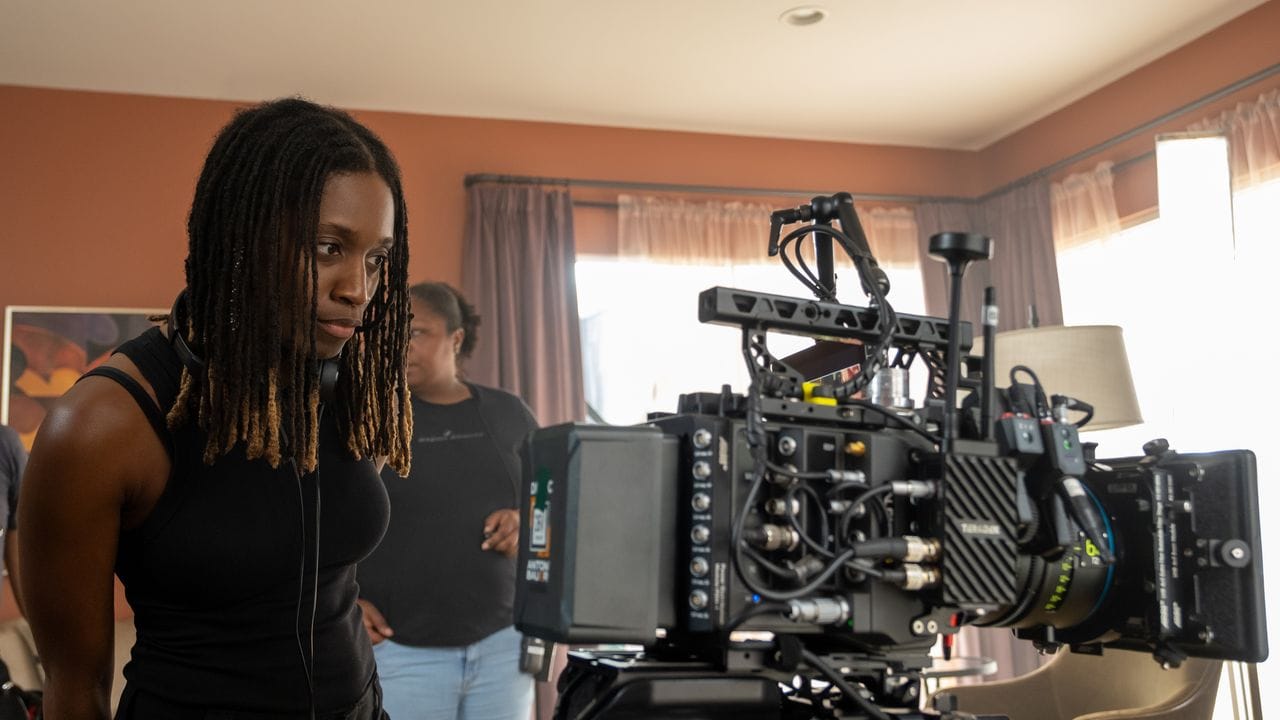
There's a particular kind of creative authority that comes from refusing to hand your vision to someone else. Playwright Aleshea Harris — Pulitzer Prize finalist, author of the off-Broadway sensation Is God Is — didn't just write the screenplay adaptation of her own work. She directed it too. "Baptism by fire," she calls it, according to Vogue. The film drops May 15, and it opens and closes with literal flames. Make of that what you will.
The story follows twin sisters Racine (Kara Young) and Anaia (Mallori Johnson), scarred from their father's violence, who receive a deathbed ultimatum from their long-absent mother Ruby — played by Vivica A. Fox — to kill the man who tried to murder her. The girls grew up in foster care believing they had no parents. Turns out their mother, who Ruby's eldest daughter calls "God," was burned alive by their father and survived. The daughters' scars came from trying to save her. Now God wants one last favor: "Make your daddy dead. Real dead." Road trip ensues. Patriarchy, meet your match.
The Cost of Getting Even
Harris always envisioned a film, but it was the women around her — colleagues, friends — who pushed her behind the camera. That female coalition off-screen deliberately mirrors the story on-screen. The twins, long fused into a single survival unit, begin fracturing under the weight of their revenge mission. Racine's appetite for violence grows; Anaia pulls back. "She literally says, 'You're looking at me like I'm the monster,'" Harris explains — and the grief in that line is the film's real engine. The adaptation let Harris go deeper into what the play only sketched: the sisters' secrets, their mirroring dynamic, the way each one has built her entire identity in response to the other.
The timing isn't incidental. Harris is clear-eyed about why this story hits differently now, in the era of the manosphere and escalating femicide statistics. "In my feed, there has been a lot about acts of femicide specifically against Black women," she says, calling out the particular cultural taboo around naming violence against Black women perpetrated by Black men. She's not interested in pathology or the "angry Black woman" trope — she's interested in where the anger actually comes from, and what it costs to carry it. "We have a mark on our heads when we're born," she says flatly. The film doesn't flinch from that.
And yet Harris — whose own female relatives chose restraint over retaliation — isn't selling revenge as catharsis. What she's really after is thornier: what does it mean to survive harm, absorb it, and still refuse to let it swallow your future whole? Racine and Anaia aren't victims in Harris's framing. They're survivors navigating an impossible calculus between justice and self-destruction. The fire is the metaphor. It always was.
Is God Is is ultimately a film about what women carry — and the precise, devastating price of deciding to put it down.
Read the original at Vogue.