In Milan, is Salone the New Fashion’s Night Out?
Recently the design tradeshow has become an unofficial stop on the international fashion circuit
Reported by Harper's Bazaar.
Milan Design Week—or Salone, if you're in the know—has undergone a seismic shift. What started as a trade fair for furniture has metastasized into a city-wide spectacle: palazzi converted into brand temples, churches turned into exhibition halls, private gardens reimagined as immersive theater. Fashion and luxury houses have crash-landed with their fat marketing budgets and creative ambitions, drowning out the actual design conversation. Some call it a travesty. Others see opportunity in the chaos. According to Harper's Bazaar, both camps have a point.
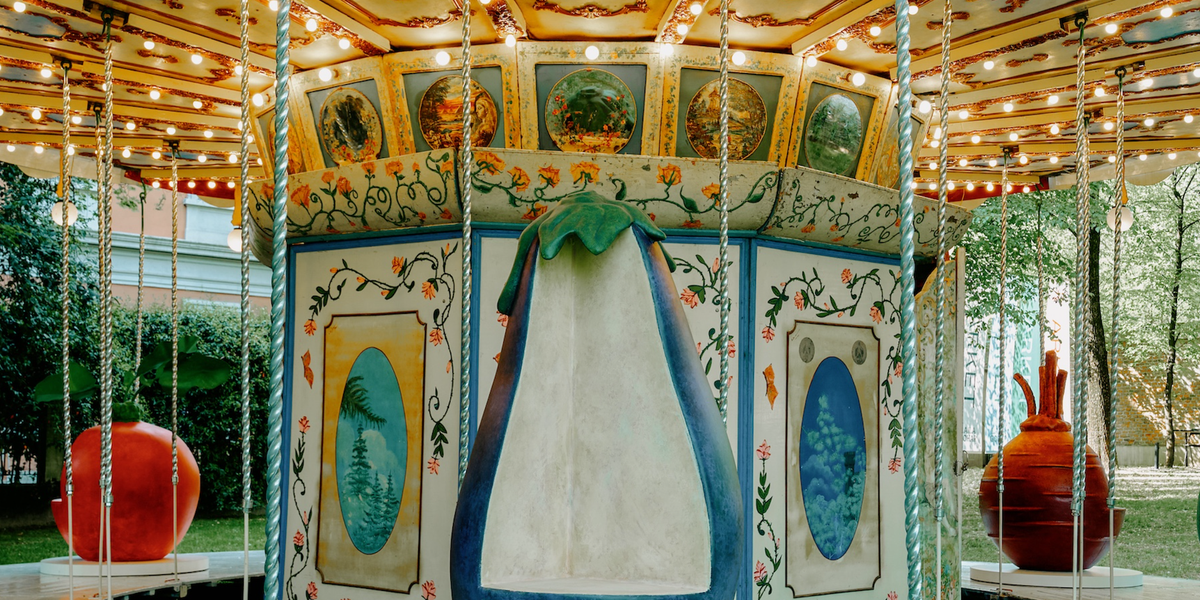
The brands doing it right aren't hawking objects—they're peddling meaning. Laila Gohar opened the week with a carousel of giant vegetables (pear, eggplant, radish) in place of horses, a delirious celebration of her Arket workwear collection that became the week's viral moment. Demna's Gucci installation carpeted a cloistered garden with blooms from the house's Flora pattern, then draped twelve tapestries—stations of the cross, basically—charting Gucci's lineage like a fever dream of brand hagiography. Was it advertising? Was it design? The answer: maybe it doesn't matter anymore.
When culture becomes the product
Prada's Chawan Cabinet, a collaboration with artist Theaster Gates, staged Japanese ceramics in a temporary tea house: Gates' hand-thrown bowls ($1,500 to $12,000) nested alongside anonymous studio pottery from Tokoname potters. The setup asked an uncomfortable question about value—folk art versus contemporary art versus luxury object—without pretending to answer it. Similarly, Jil Sander's new designer Simone Bellotti opened her Milan HQ as a library of 60 books chosen by cultural figures (Sofia Coppola picked Yukio Mishima; Vince Aletti selected Susan Sontag), each lit like a relic in a church. Nothing was for sale. The brand was the library itself.
Other highlights leaned harder into escapism: Michael Bargo dressed a bourgeois apartment in fur blankets and archive skunk pelts for The Row; 6am Glass suspended sculptural stools inside a historic swimming pool. These weren't selling furniture or clothes. They were selling access, memory, the fantasy of knowing something the outside world doesn't. In an industry choking on oversaturation and reinvention, Salone has become the ultimate attention play—less about what you buy than about what you've seen, who you know, which rope line you crossed. The real luxury isn't the product. It's the story you get to tell.
Read the original at Harper's Bazaar.