Indian Designers Are Breaking Into Paris Couture Week
This season, Manish Malhotra will become the fourth Indian designer to make his way onto the official couture calendar in Paris. It’s a sign of a bigger shift.
Reported by Vogue.
For years, the most breathtaking embroideries on the Paris couture runways — the ones that made editors gasp and buyers reach for their checkbooks — were made in India, by Indian hands, with no credit given. The label read Paris. The craft was from somewhere else entirely. This July, that long-standing imbalance gets a little more complicated, and a lot more interesting.
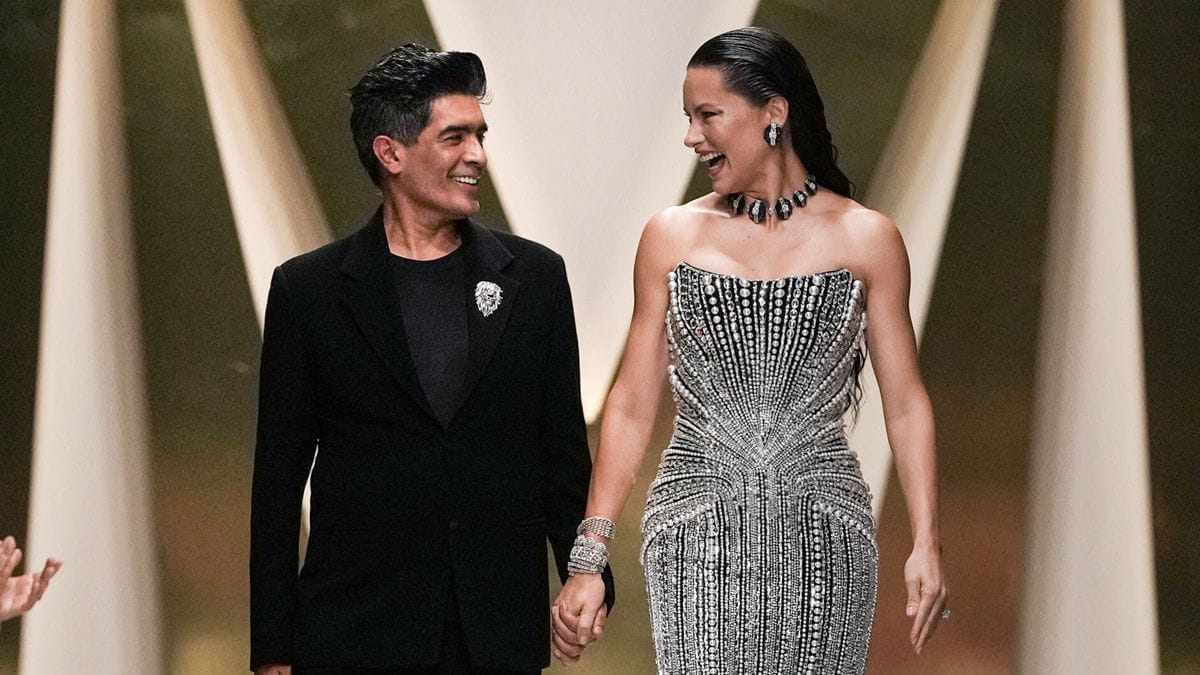
According to Vogue, Manish Malhotra will make his Paris Haute Couture Week debut on July 8, becoming the fourth Indian designer on the official calendar. He joins Rahul Mishra — who pioneered the spot in January 2020 and has shown 14 consecutive seasons without a break — and Vaishali S, the first Indian woman on the calendar, who opened a Boulevard Saint-Germain flagship in 2024. Gaurav Gupta, whose sculptural gowns have been worn by Beyoncé, Serena Williams, and Aishwarya Rai, is sitting out this season to open his Paris atelier — but plans to return to the calendar in January 2027. Malhotra's résumé is its own argument: a label over two decades old, clients including Kim Kardashian and Jennifer Lopez, and costumes for more than a thousand films. "Paris offers visibility in the West," he says, "but what excites me most is contributing to the global couture conversation from an Indian perspective."
From Source of Craft to Center of Vision
The shift matters because the old narrative was stubbornly fixed: India as supplier, Europe as author. When Dior staged its pre-fall 2023 show in Mumbai, it was a landmark — but India was still framed as a place of beautiful making, not creative origination. That framing is cracking. Pascal Morand, executive president of the Fédération de la Haute Couture et de la Mode, traces the France-India craft relationship back to the 17th century, calling the growing calendar presence "a reflection of a shared commitment to craftsmanship, ornament, and creative dialogue." Meanwhile, Harrods fashion buying director Simon Longland — whose store stocks Gupta and has hosted Malhotra — credits Indian designers with bringing "extraordinary artisanal expertise refined over generations" to a week that has quietly become more global over the past decade. Digital fashion commentator Hanan Besovic is more direct: "Too many houses need to acknowledge that a lot of their craft has been done in India."
The commercial case is already written. Gupta's brand is carried at Bergdorf Goodman and Vakko; multiple Indian designers retail at Harrods and Neiman Marcus. But the designers themselves keep pointing past the sell-through numbers. Mishra, who has spent five years making this argument from the inside, says the greatest value has been cultural — giving Indian artisans international visibility while reframing handcraft as a vehicle for innovation, not just heritage. Back home, the ripple effect is measurable too: Indian brides are now requesting runway couture looks directly, engaging with silhouette and construction in ways that go beyond traditional embellishment-first expectations.
Four Indian designers on the Paris couture calendar isn't a moment — it's a correction long overdue, and it's only getting started.
Read the original at Vogue.