Is Phoebe Gates’s Phia the Most Celeb-Backed Shopping Startup of All Time?
Alix Earle, Khloé Kardashian, Sydney Sweeney, Mindy Kaling, Sophia Bush, Alexandre Arnault, Karlie Kloss — Phia has added a roster of more than 30 names to its cap table. What now?
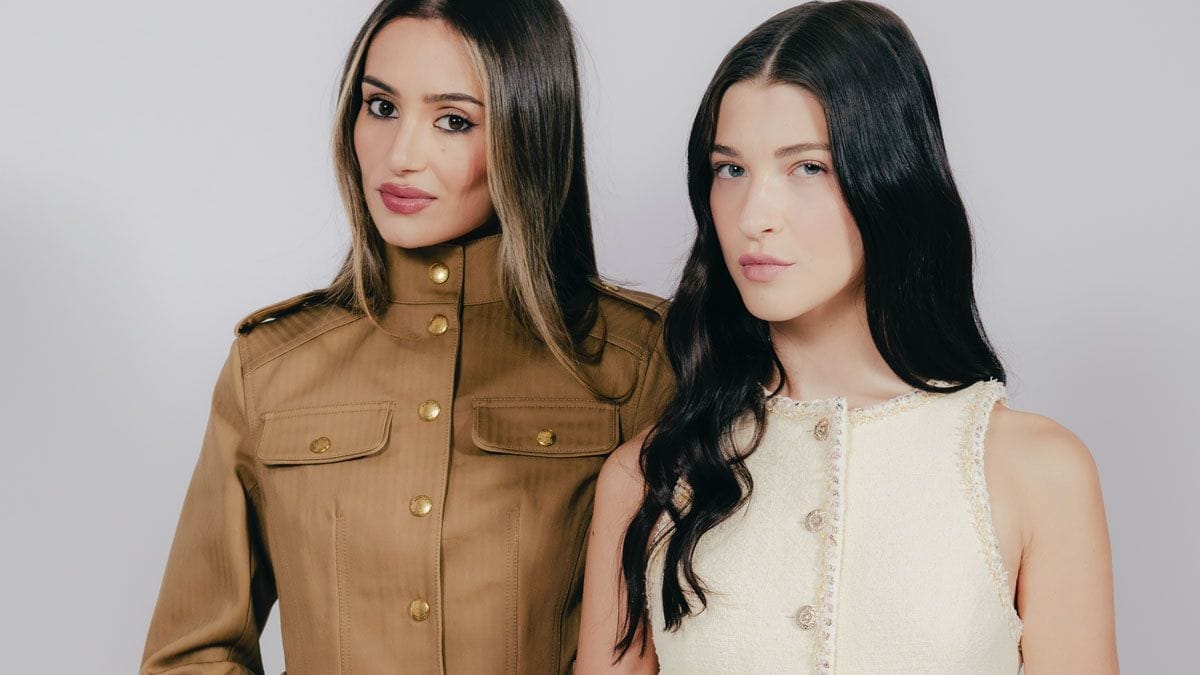
Reported by Vogue.
The AI shopping race has a new frontrunner — and it arrived with a guest list longer than most Met Gala after-parties. Phia, the shopping app co-founded by Phoebe Gates and Sophia Kianni, has closed a $35.5 million Series A round — oversubscribed from its original $35 million target — bringing total funding to $43.5 million at a $185.5 million valuation, according to Vogue. The round was led by Notable Capital, Khosla Ventures, and Kleiner Perkins, with tech heavyweights including OpenAI's Charles Porch and Venmo founder Iqram Magdon-Ismail also participating.
Then there's the celebrity roster, which reads less like a cap table and more like a seating chart: Khloé Kardashian, Sydney Sweeney, Mindy Kaling, Karlie Kloss, Paris Hilton, Ice Spice, Rachel Zoe, Alix Earle, Jessica Alba, Halsey, Winnie Harlow, Priyanka Chopra, LVMH's Alexandre Arnault, Ashley Graham, Lori Harvey, Olivia Culpo, Eileen Gu, Shaboozey, Gunna, The Chainsmokers — and that's not even the full list. Phia's first round had already counted Hailey Bieber, Kris Jenner, Sheryl Sandberg, and Sara Blakely among its backers. Gates describes the strategy as intentional: operators who built the last era of consumer tech, plus cultural tastemakers who are the target consumer.
What Phia Actually Does
At its core, Phia is a browser extension that runs quietly while you shop — surfacing cheaper alternatives, flagging secondhand options on eBay, and learning your preferences over time: brand, color, price point, past purchases. The company reports 1.5 million users and 9,600 brand partners after 14 months, and claims purchases made through the extension carry a 50% lower return rate than average. New features rolling out alongside the extension include a unified shopping cart spanning multiple retailers, a digital closet built from purchase history, and a rewards program. Discovery — the hardest part of the funnel to crack — is next. "Fashion is an industry where women are spending enormous amounts of time and money, and we have the least personalization to show for it," Gates said. "You and I go to a big retailer's site and have the exact same experience."
That sameness is exactly what Phia is betting against. With a catalog of 350 million items across retail and resale, the platform wants to function as an AI-powered affiliate engine — letting tastemaker investors like Earle share what they're actually buying with their followers, monetizing taste at scale. It's a direct play into the same territory as ShopMy and TikTok Shop, but layered with individual preference data. Kianni frames the influencer investment as structural: "We can see that social commerce is a huge trend underpinning e-commerce right now." Phia also runs bi-weekly user feedback dinners — and the number-one complaint from customers is, unsurprisingly, a lack of personalization.
Whether AI can genuinely decode personal taste — rather than just approximate it — remains an open question across the industry, but Phia is raising serious money and assembling serious names to prove it can.
In the AI shopping gold rush, the real differentiator won't be the algorithm — it'll be whether any platform can actually learn you well enough to shop better than you would alone.
Read the original at Vogue.