La Cambre Fall 2026 Ready-to-Wear
La Cambre Fall 2026 Ready-to-Wear collection, runway looks, beauty, models, and reviews.
Reported by Vogue.
Ten students. A jury of industry titans. And a 40th anniversary that turned Brussels' La Cambre Modes graduation show into something closer to a high-stakes audition than a school showcase. According to Vogue, the Masters show — split between first and second-year students — drew an extraordinary panel of alumni including Chanel's Matthieu Blazy, Saint Laurent's Anthony Vaccarello, Rabanne's Julien Dossena, Marine Serre, Olivier Theyskens, and several more creative directors whose collective résumé reads like a syllabus in modern fashion power. For design students anywhere else, this would be the stuff of fantasy.
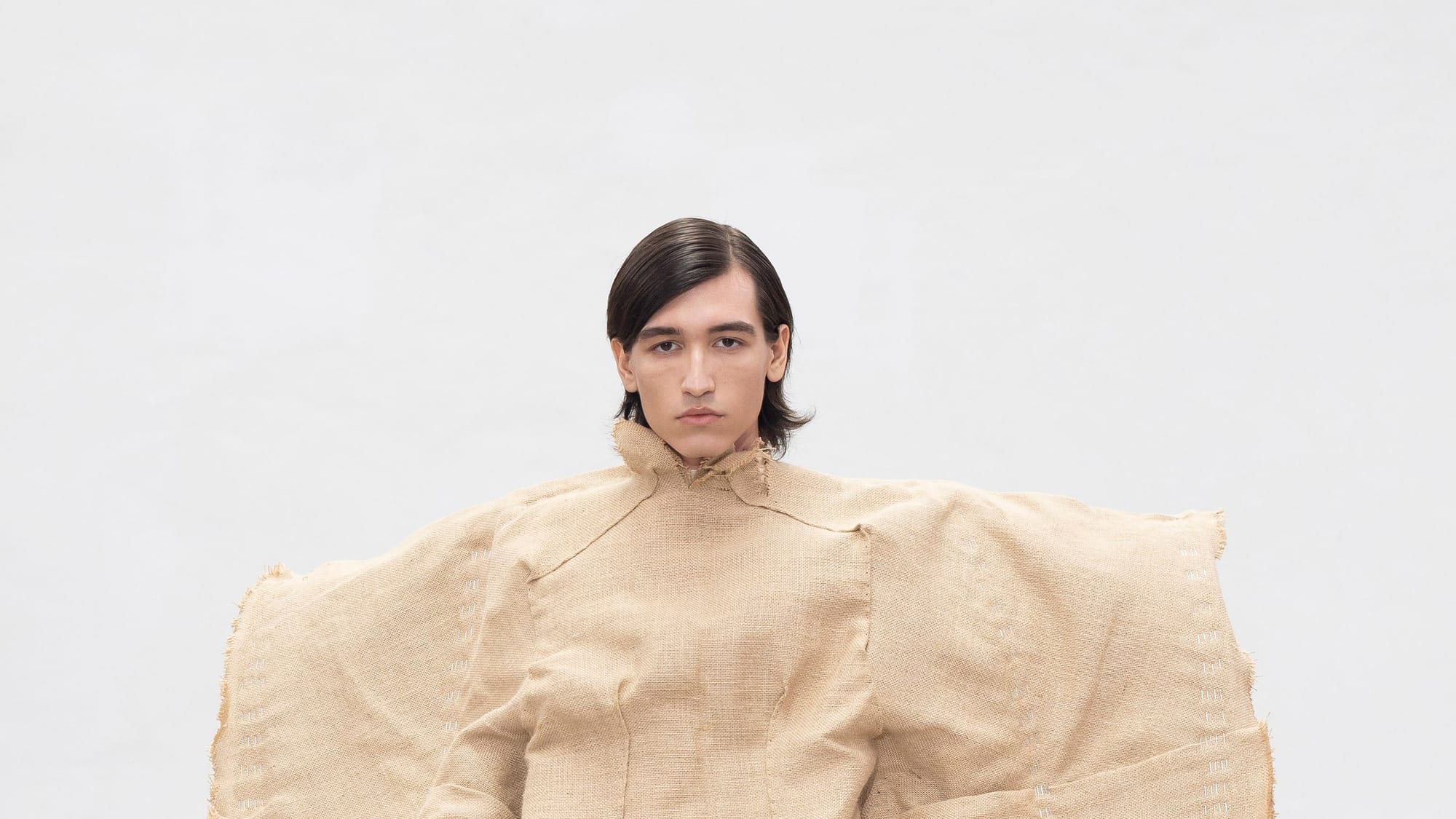
What La Cambre produces isn't trend-reactive fashion — it's conceptual work that starts outside the industry entirely. Under Tony Delcampe and his faculty, students are pushed to break from conventional garment logic before they ever attempt to rebuild it. The results this season were visibly obsessed with material deconstruction: raw-edged strips, architectural fabrics, furniture references. First-year student Gaspard Lasne sent models down the runway literally incorporated into the wooden frames of café chairs. Belgian surrealism, very much alive.
Where Craft Meets Conviction
Second-year student Lalou Weyrich translated the mechanics of paper pop-up books into silhouettes — tweed coat proportions, bouncing plissé polka skirts, micro animal-print blouses — with a lightness that made the conceptual feel genuinely wearable. Theodora Hadj Moussa Lauble, whose previous collection fused fabric strips with balsa wood in a sailboat-inspired construction (an idea that clearly rippled through her cohort), brought her final collection closer to the body while still embedding venetian blind-like slats into coats, jackets, and dresses. Both designers occupy a rare space: technically rigorous but never joyless.
Then there was Manon Schied, whose collection arrived with the most explicit political charge on the runway. Inspired by Zoe Leonard's poem "I Want a Dyke for President," Schied researched lesbian dress codes from the 1930s through the 1970s and translated them into ribbed tanks, trompe l'oeil ties, ticking shirts cut into vertical strips with raw seams exposed, and trousers hybridized with boxers. Her models carried fabric megaphones. Bold 3D text across shirt chests left zero room for interpretation. Before the show had even fully settled, designer Ester Manas — whose Brussels studio Schied had been interning at — ran up to congratulate her. That internship became a job offer, on the spot.
La Cambre is radically small by design, but its reach is anything but — and for ten students who just showed their work to the people shaping fashion's present, that network is the whole point.
Read the original at Vogue.