Lanvin’s Peter Copping on the Enduring Appeal of the 1920s
At SCAD, where he was a designer in residence, the Lanvin creative director mused on both mentoring and mining the past.
Reported by Vogue.
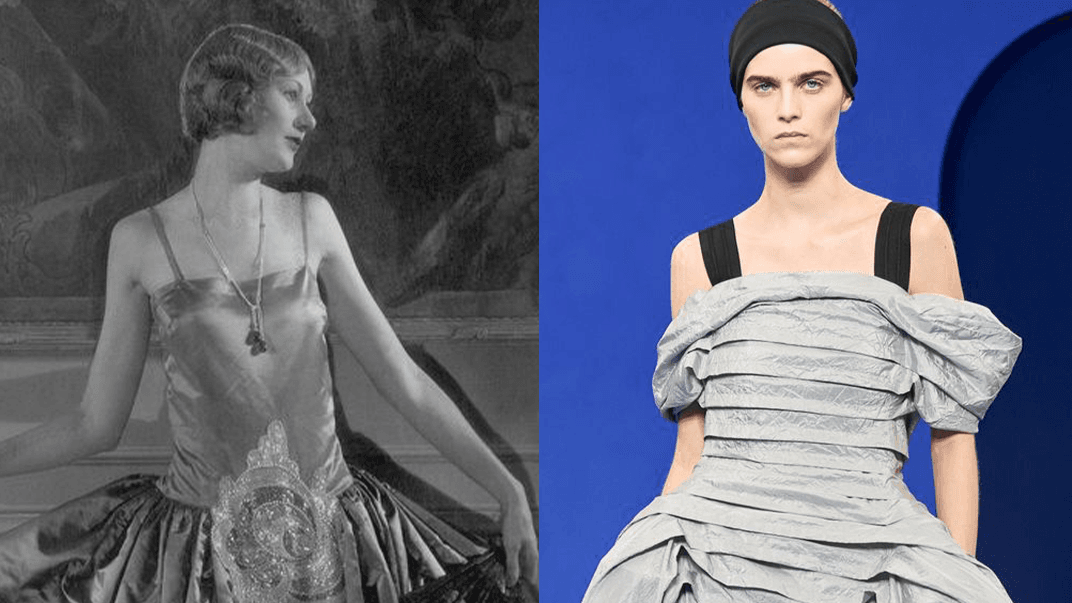
Fashion has a habit of circling back, and right now, the 1920s are having more than a moment. Peter Copping, who became artistic director of Lanvin in September 2024, sees the decade not as nostalgia fodder but as the actual origin point of everything we consider modern dressing. "It's probably where modern fashion's roots really come from," he says. According to Vogue, the parallel feels earned: last year marked 100 years of Art Deco and The Great Gatsby, and two houses that literally built the Roaring Twenties aesthetic — Lanvin and Chanel — are both under new creative direction with something to prove.
For Copping, unlocking Lanvin meant going beyond the clothes. When he arrived, the Museum of Decorative Arts opened its doors after hours so he could stand inside Jeanne Lanvin's reconstructed bedroom — not behind a rope, but fully inside it, surrounded by her possessions. "This is who this woman was," he recalls thinking. What struck him hardest wasn't the opulence; it was that she came from nothing. The sophistication was entirely self-made. That's the throughline he's been pulling at ever since — Deco shapes sourced from furniture and interiors rather than runway references, lace cut into hard zigzags and triangles, bag hardware that nods to marquetry inlay. The archive is vast (Lanvin ran two in-house embroidery ateliers, deliberately keeping craft proprietary), and Copping is clearly treating it like primary source material.
The House That Built Itself
What makes Lanvin's century-long survival unusual isn't just longevity — it's structure. Copping credits the house's roots as a genuine family business, with Jeanne's daughter eventually taking the reins and a broader family network stabilizing operations early on. But the founder herself was relentlessly expansive: she started in millinery, moved into children's wear (women started requesting versions of what she made for her daughter), and eventually built out sports lines, home goods, fragrance, and — 100 years ago this year — menswear. "She was really the first lifestyle brand," Copping says flatly. For his part, this is his first time designing for men, and he's leaning in: archival embroidered gowns from the '20s have been reinterpreted as evening T-shirts, pieces that, notably, women have been buying too.
Copping has also been serving as designer-in-residence for SCAD's class of 2026, working with six students on Lanvin-inspired eveningwear. He gave them the archive and no era restrictions — they could have gone Montana or Alber Elbaz — and every single one gravitated to Jeanne Lanvin's era. The brief asked them to consider not just an aesthetic but a specific woman and a specific event: who are you dressing, and for what? One student designed something so precisely right for Zendaya that Copping is half-seriously considering sending it to Law Roach. "It's a bit like a fuck off to the design houses," he says of the idea — which tells you everything about where his head is at.
The 1920s liberated women from the corset and gave fashion its modern skeleton; what Copping is building at Lanvin suggests that skeleton still has plenty left to say.
Read the original at Vogue.