Marcel Duchamp and His Women
Art historians have often viewed the stylistic transformations in Picasso’s oeuvre as evolving in tandem with his significant amorous encounters. Was the same true for Duchamp?
Reported by Vogue.
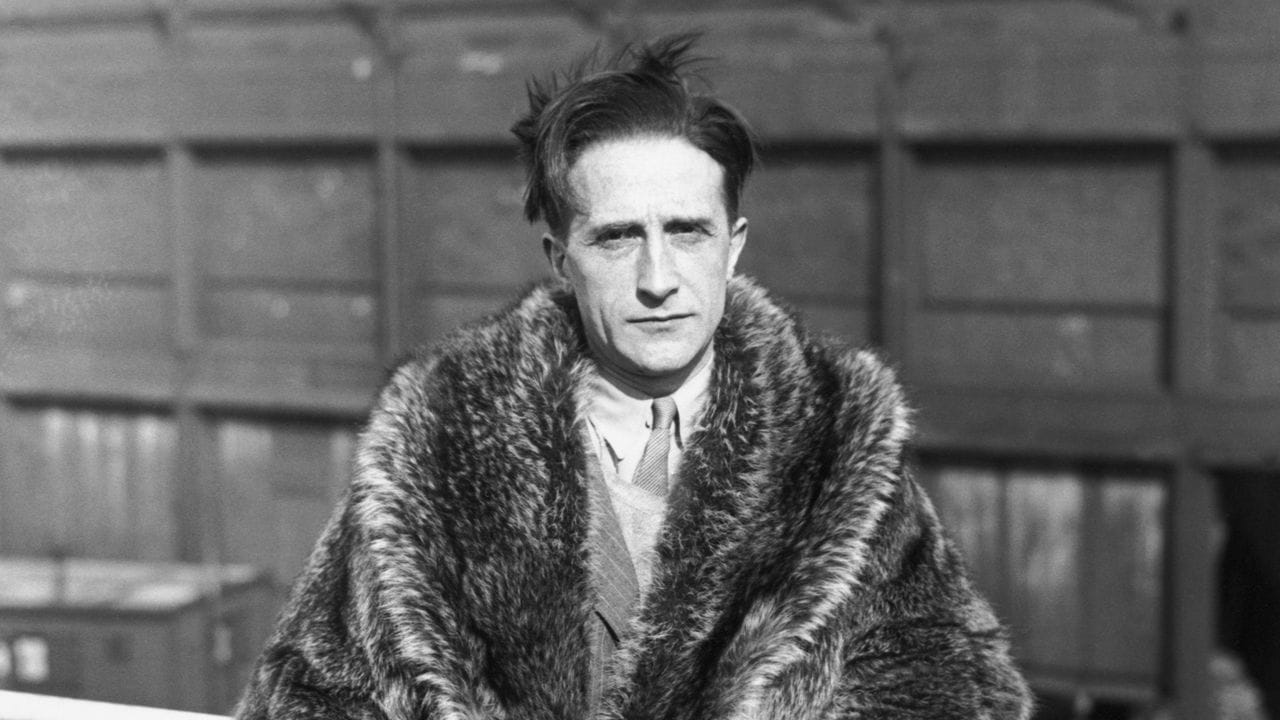
Marcel Duchamp hasn't had a North American retrospective in half a century — and MoMA's current survey, co-curated by Ann Temkin, Michelle Kuo, and Matthew Affron (the show travels to the Philadelphia Museum of Art in October), makes clear exactly why that absence felt so loud. The exhibition is brain-teasing, patience-rewarding, and genuinely essential. What it also does, if you're paying attention, is quietly reframe Duchamp not as the cool, hermetic genius of art-history lore, but as a man whose creative life was perpetually entangled with women.
According to Vogue, Brazilian sculptor Maria Martins — a vibrant, politically connected socialite and serious artist whose biomorphic work drew from Amazonian folklore — most likely met Duchamp in March 1943 at a Manhattan gallery opening. Their affair, largely clandestine, lasted eight years in practice and far longer in memory. Scholar Francis Naumann traces its full arc in his new book, Impossible: The Love Affair Between Marcel Duchamp and Maria Martins, and the Artwork It Inspired. The evidence is right there at MoMA: the erotic small sculptures Duchamp made during that period — including Female Fig Leaf (1950), abstract but unmistakably bodily — and his studies for Étant donnés, the monumental secret work he spent the last 20 years of his life building while publicly insisting he'd quit art for chess. Martins modeled for its central figure.
The Women Behind the Myth
Martins was hardly alone in shaping his practice. Gabrièle Buffet-Picabia, a trained composer who gave up her own career when she married painter Francis Picabia, became part of an intense creative triangle with Duchamp — a dynamic that ignited years of ferment for both men, and ended in a lifetime of friendship for all three. Mary Reynolds, Duchamp's primary Paris companion for nearly two decades, took up bookbinding in the 1930s just as Duchamp was engineering his own portable archive, The Box in a Valise — his life's work folded into leather briefcases, compact and for sale. Whether Reynolds influenced that move is an open question, but the timing is hard to ignore. Then there was Katherine Dreier, co-founder with Duchamp and Man Ray of the Société Anonyme, whose patronage he navigated for 30 years with characteristic elegance and emotional distance.
Duchamp's alter ego Rrose Sélavy — born in 1920s Paris, photographed by Man Ray, painted by Florine Stettheimer — was herself a kind of commentary on gender as performance, decades before that became a cultural talking point. Her name was a French pun: Éros, c'est la vie. Even his most famous early scandal, Nude Descending a Staircase, which made him notorious at the 1913 Armory Show, was a body in motion — ungendered, mechanical, and profoundly strange. Peggy Guggenheim wrote in her memoir that "every woman in Paris wanted to sleep with him," and while Guggenheim herself didn't, she leveraged his counsel to open her first London gallery in 1938.
The real provocation of this retrospective isn't the readymades or the chess games or the elaborate conceptual games — it's the suggestion that Duchamp's most radical work was never made in isolation, and the women who loved him, collaborated with him, and outlasted him deserve their place in that story.
Read the original at Vogue.