Met Gala Modelpalooza: All the Looks, All the Credits, All in One Place
Check out these compilations of your favorite models’ Met Gala looks.
Reported by Vogue.
The Met Gala isn't just fashion's biggest night—it's a career validator for models. Who shows up matters. What they wear matters more. And where that dress came from? That's the stat sheet everyone's keeping score on.
Models have always been the Met's unofficial MVPs. They understand the assignment in a way civilians simply don't: this is performance, provenance, precision. A Versace column from 1992 is different from a Versace column from 2024. The cut, the era, the moment—it all reads.
When Fashion History Walks the Red Carpet
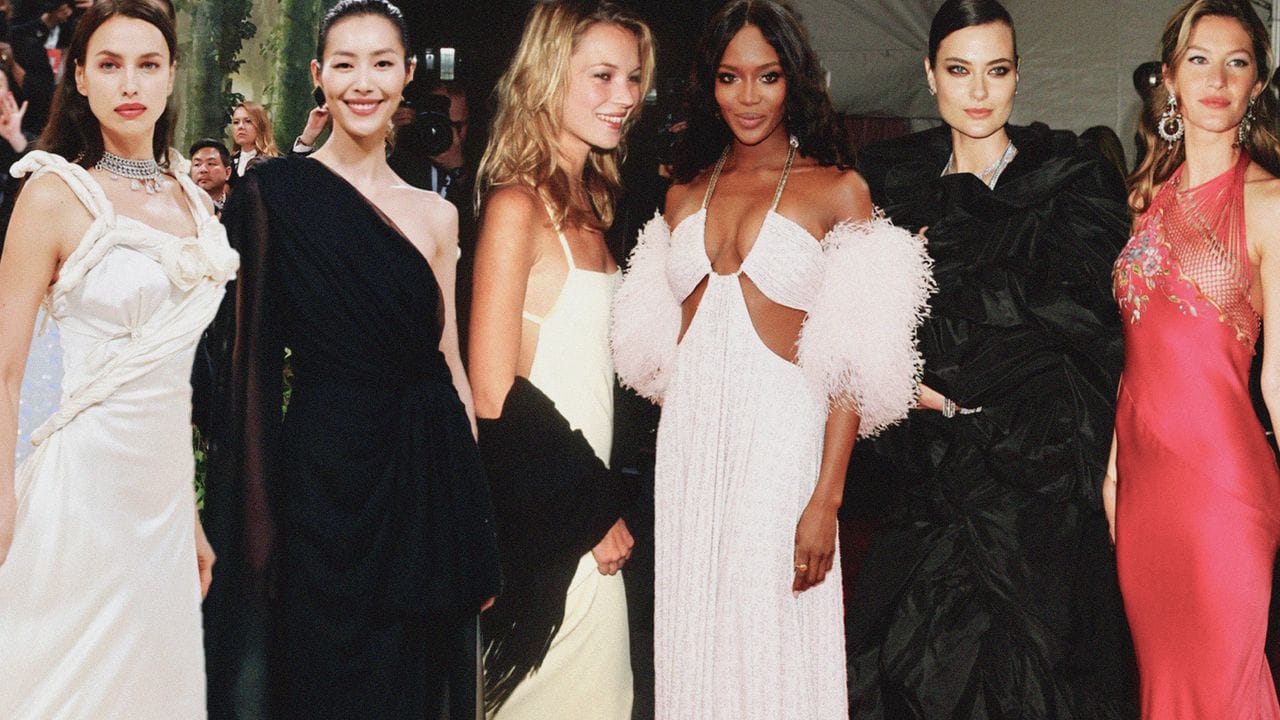
According to Vogue's retrospective database, the archive tells a story. Christy Turlington arriving in 1992 as a pearl-draped Versace vision—that's a blueprint. Naomi Campbell in 2017, rewearing an Azzedine Alaïa directly from the runway, making a statement about ownership and heritage. Gisele Bündchen in 2006 in a bias-cut raspberry gown that required the kind of body confidence only supermodels can deliver. Kate Moss in Calvin Klein (1995) proved that minimalism could be just as loud as maximalism. And Liu Wen's recent Saint Laurent moment—black chiffon, severe elegance—reminded us that the Met's real currency isn't novelty; it's presence.
The timeline matters. From '90s supermodels to contemporary faces like Adut Akech, Anok Yai, and Karlie Kloss, the model moment has only intensified. These aren't just attendees; they're custodians of fashion's most visible moments. They carry runway debuts on their bodies. They make or break what the industry will remember. Some, like Linda Evangelista and Naomi Campbell, have attended so many times they've essentially created their own Met mythology. Others like Quannah Chasinghorse represent a new generation reclaiming the gala's narrative.
What makes this different from other red carpets is the intellectual rigor. A model's Met look isn't just about being seen—it's about being studied. The garment's provenance gets tracked. The designer's intention gets analyzed. The historical moment gets contextualized. That's why the same woman in different eras matters. That's why a dress worn down a runway gets worn to the Met. It's not recycling; it's archaeology.
The Met Gala model database isn't nostalgia—it's documentation of who understood the assignment and nailed it.
Read the original at Vogue.