Pratt Institute Fall 2026 Ready-to-Wear
Pratt Institute Fall 2026 Ready-to-Wear collection, runway looks, beauty, models, and reviews.
Reported by Vogue.
Pratt Institute has been putting student designers on a runway since 1899 — predating Chanel, predating modernism, predating basically everything we recognize as fashion today. According to Vogue, that makes it the longest-running collegiate runway show in the United States, which means the class of 2026 is inheriting a legacy that has survived world wars, the New Look, grunge, and the internet. What it hasn't survived yet is this particular cultural moment: AI anxiety, climate collapse, an immigration debate that's anything but abstract. The 28 students who showed their senior thesis collections — five to seven looks each — made sure you felt every bit of it.
The Standouts Were Personal, Political, and Technically Alive
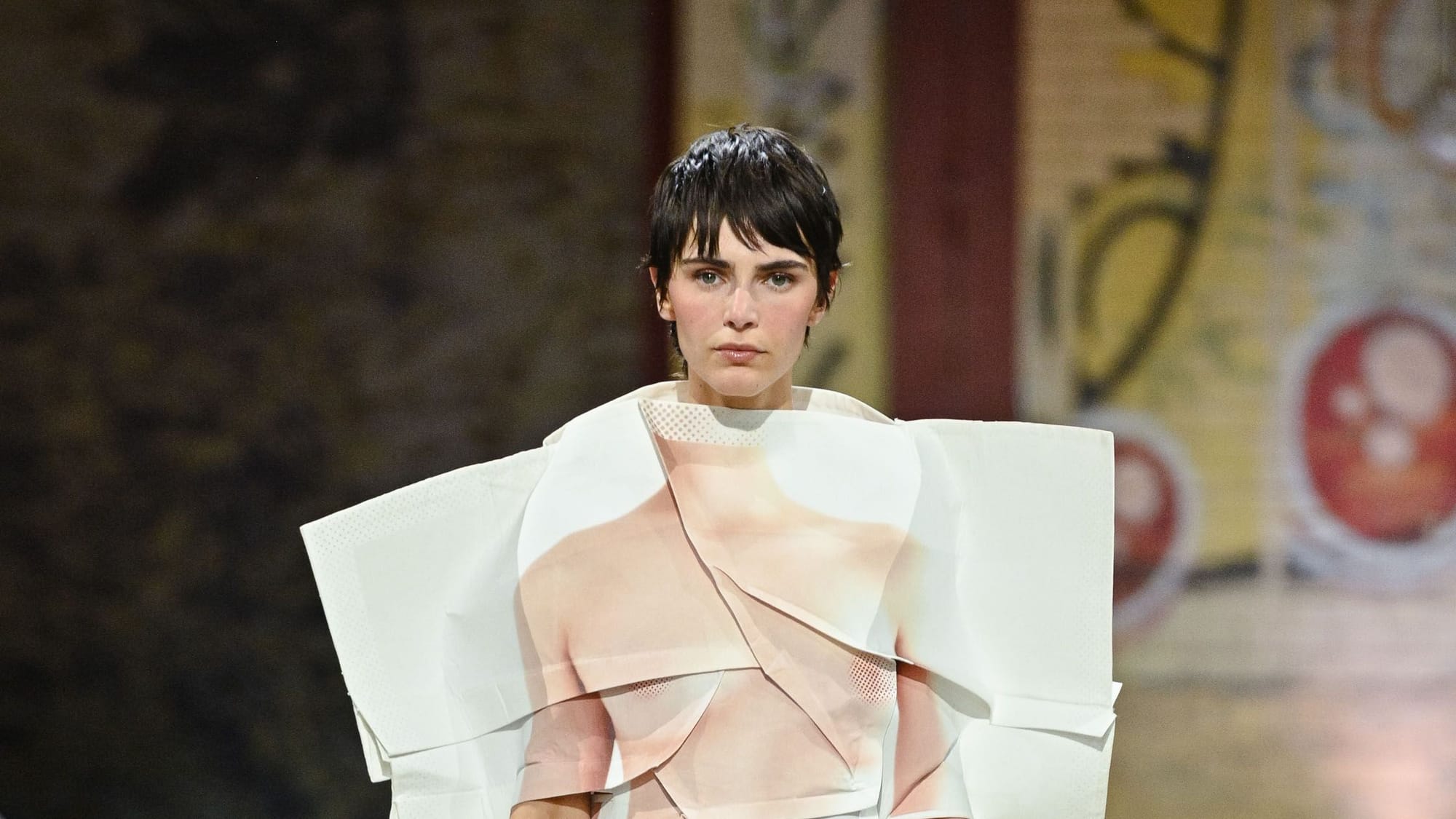
Ava Wilson was the name you left with. Her lingerie dresses — hip-padded, ribbon-festooned, topped with shaggy fur stoles — read as an opulent love letter to vintage Black glamour: Eartha Kitt, Donna Summer, Diana Ross. Wilson wove actual hair tracks into boudoir corsets and lace-edged slip dresses, making hair itself a design material and a statement. The result was frisky and ironic, but its undertow — the weight of Black beauty standards, the politics of adornment — hit harder than any of the surface shimmer suggested. Xingui Liu opened the show with something equally precise. A student from China whose life has been defined by constant relocation, Liu heat-pressed upcycled shirts into vacuum-bag creases, then folded a garment into a flat square printed with a nude female form — the body itself as something packed, compressed, in transit. Marc Jacobsian chaos with genuine conceptual spine.
Amina Walker cut pastoral toile de Jouy and prairie prints into a patchwork long-sleeve dress with a cinched waist and pleated skirt — romantic without being soft. Naisa Agrawal pulled off something stranger: Edwardian silhouettes in burgundy, moss, and umber, with embroidery modeled on cracked soil, all of it inspired by her allergies. It sounds like a thesis statement and wears like one too, in the best possible way.
The through-lines across the full show — dense patchwork, pulled and distorted silhouettes, loose layered shapes — suggest a generation that finds beauty in disruption and meaning in the handmade. Many collections leaned art project over commercial pitch, which is either a concern or a relief depending on your relationship to fashion-as-product. But the antidote to all that conceptual density arrived in Shannon Bollin's filmy cropped button-up and wide-cut marigold trousers: clean, confident, undeniable. A reminder that the most radical move is sometimes just getting the proportions exactly right.
When young designers at the start of their careers are already working through immigration, identity, climate grief, and the politics of their own bodies, the future of fashion isn't uncertain — it's just honest.
Read the original at Vogue.