Richard Avedon Saw It All
Ron Howard’s new documentary explores the groundbreaking vision of the photographer, who got his start at Harper’s Bazaar
Reported by Harper's Bazaar.
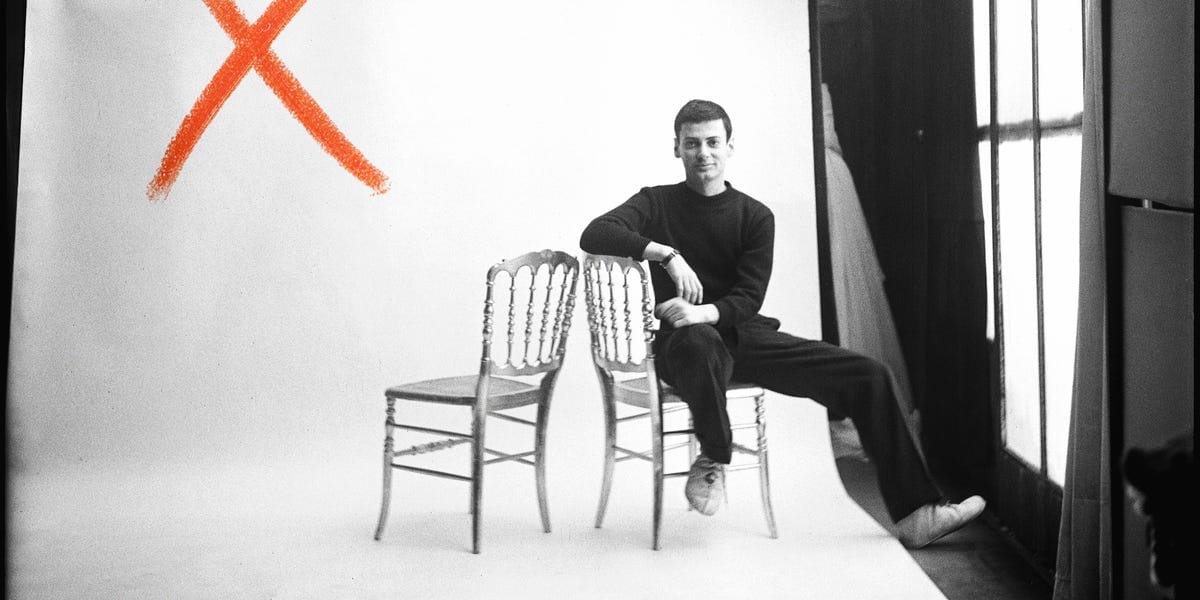
Before the selfie, before the influencer, before the algorithm decided what "authentic" looked like, there was Richard Avedon — a photographer who understood something most people still can't articulate: that performance and personhood aren't opposites. They're the same thing, badly lit or brilliantly so. Ron Howard's new documentary, Avedon, which premiered at Cannes, excavates that thesis through the life and lens of one of the most consequential image-makers of the 20th century. According to Harper's Bazaar, the film draws on archival footage and interviews with Hilton Als, Tina Brown, Calvin Klein, Lauren Hutton, Larry Gagosian, Tyler Mitchell, and Bazaar editor in chief Samira Nasr to trace Avedon's arc from fashion wunderkind to cultural reckoning.
Avedon arrived at Harper's Bazaar in 1944, age 21, fresh off the Merchant Marine and pointed toward something nobody had fully named yet. Art director Alexey Brodovitch — Russian-born, modernist to his bones, pathologically allergic to stale ideas — didn't tell the young Avedon how to shoot fashion. He told him to figure out what fashion photography could be. The women Avedon put in his frames responded accordingly: they looked joyful, dangerous, distracted, like they'd just come from somewhere thrilling and were already late for somewhere better. "The scenes he created to show off the clothes made magazine readers want to be those characters in those scenes," Howard says. In an era when fashion magazines still treated elegance like formaldehyde, Avedon's images moved.
The Camera as Mirror
His most famous image — model Dovima in a Dior gown alongside shackled, melancholy elephants at the Cirque d'Hiver in Paris — is frequently cited as one of the greatest fashion photographs ever made. Look at it long enough and it stops being glamorous. It becomes something stranger: a woman impossibly beautiful and somehow trapped inside her own fantasy. That tension was the point. Avedon photographed Marilyn Monroe in 1957 for Life, catching her depleted by the persona she'd built. He photographed Marian Anderson — who had sung on the Lincoln Memorial steps after being barred from Constitution Hall by the Daughters of the American Revolution — and later turned his lens on those same Daughters, documenting what institutional racism actually looks like when it has a face and a club card. He fought for models of color like China Machado and Donyale Luna when representation in fashion was an argument, not an aspiration.
The film lands at a precise cultural moment. Deepfakes, AI-generated imagery, and the industrialized performance of selfhood have made Avedon's central preoccupation newly urgent — how images shape identity, manufacture desire, and occasionally, almost accidentally, tell the truth. Avedon himself narrates much of Howard's documentary through archival recordings, speaking, as the director notes, with literary precision. (He was famous enough that Fred Astaire played a version of him in the 1957 musical Funny Face, on which Avedon served as an advisor.) "After making this film," Howard says, "I now wish I'd gotten to know him not to be his subject, but to be his friend." High praise from a man who has spent his career studying characters worth knowing.
Avedon grew up on Manhattan's Upper West Side, co-edited his high school literary journal with classmate James Baldwin, watched his mother ruthlessly stage and re-edit family photographs to preserve appearances the Depression had stripped away — and then spent six decades making images that understood exactly what all of that costs.
In the age of AI and performed authenticity, Avedon's real legacy isn't the pictures themselves — it's the question embedded in every single one: who are you when someone is watching?
Read the original at Harper's Bazaar.