The Chanel Whisperer
Only five seasons into his tenure as creative director, he’s revolutionized one of the world’s most iconic fashion houses—and made us all want to be a part of it
Reported by Harper's Bazaar.
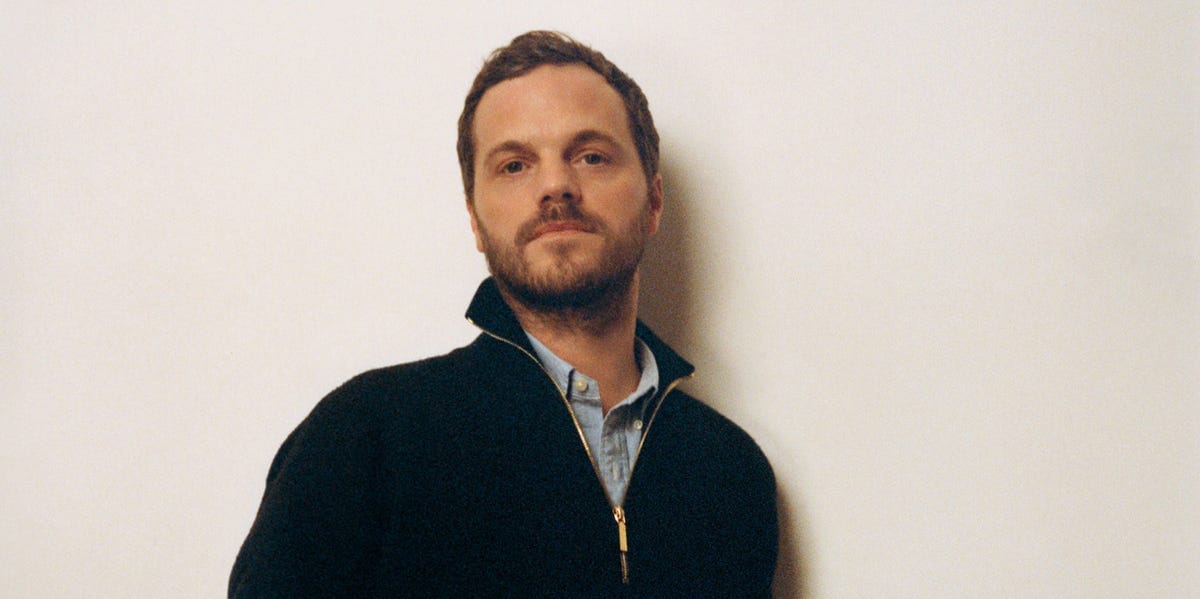
Matthieu Blazy arrived at Chanel's storied 31 Rue Cambon salon on a gray February afternoon, and something shifted. The new artistic director—now four seasons deep into a role that still visibly awed him—wasn't interested in preserving Chanel as a museum piece. He wanted to blow it open.
"I thought that the Chanel aesthetic was somehow overshadowing the idea of women," Blazy told me, seated in cushy ivory armchairs beneath the gaze of Coco herself. "It was one woman, but I see many, many women." This wasn't some diplomatic sound bite. It was a fundamental reckoning with what Chanel could be—not a closed system of tweed and quilted bags for the few, but a living language anyone could speak.
The Subway as Sanctuary
When Blazy staged Chanel's Métiers d'art show last December in an abandoned New York City subway station, he articulated his entire vision in a single gesture. Gone were Lagerfeld's exotica—the Far East glamour, the literal rocket ships—replaced by something more radical: an underground platform where models moved like commuters, wearing garments that took hundreds of hours to construct. A quarter-zip sweater and jeans. A silk charmeuse denim. A bouclé flannel. Embroidered jackets that looked lived-in. The dissonance was the point. Blazy was showing that Chanel's mastery of craft didn't require spectacle—it required recognition.
The casting reflected this too. Stephanie Cavalli, a 49-year-old vintage shop owner and model, has become one of his muses. Bhavitha Mandava, an NYU engineering student, opened his debut. A$AP Rocky and Pedro Pascal wear his pieces alongside Oscar winners like Jessie Buckley, who felt "emboldened and tall and alert" in a red-and-pink gown. Actress Teyana Taylor noted the obvious: "Matt understands that the clothes need to complement the person wearing them." No gatekeeping. No hierarchy of worthiness.
Blazy drapes rather than sketches, pulling from Marie Antoinette and Rosalía with equal ease, his soundtrack ranging from Snap! to Sister Nancy. He's rechristened Chanel's sizing system—goodbye 36, 38, 44, 48; hello S, M, L—and stripped gender from the merchandising entirely. "There are just pieces that fit everyone," he said flatly. The dream, in his telling, isn't about owning the product. It's about wearing the feeling—whether that's a student in an old quarter-zip or a young woman chopping down a blazer to make it her own. According to Harper's Bazaar, Blazy's approach represents a fundamental shift from Lagerfeld's pop-culture juggernaut back toward Coco's original ethos: designing for how women actually move through the world, not how they're supposed to fit into a brand.
Chanel under Blazy isn't less luxurious; it's just stopped pretending luxury is about exclusion.
Read the original at Harper's Bazaar.