The Most Wildlife-Immersive, Nature-Friendly Way to Safari is on Horseback
On a horse safari, you’re not an intrusion—you become, momentarily, part of the herd.
Reported by Vogue.
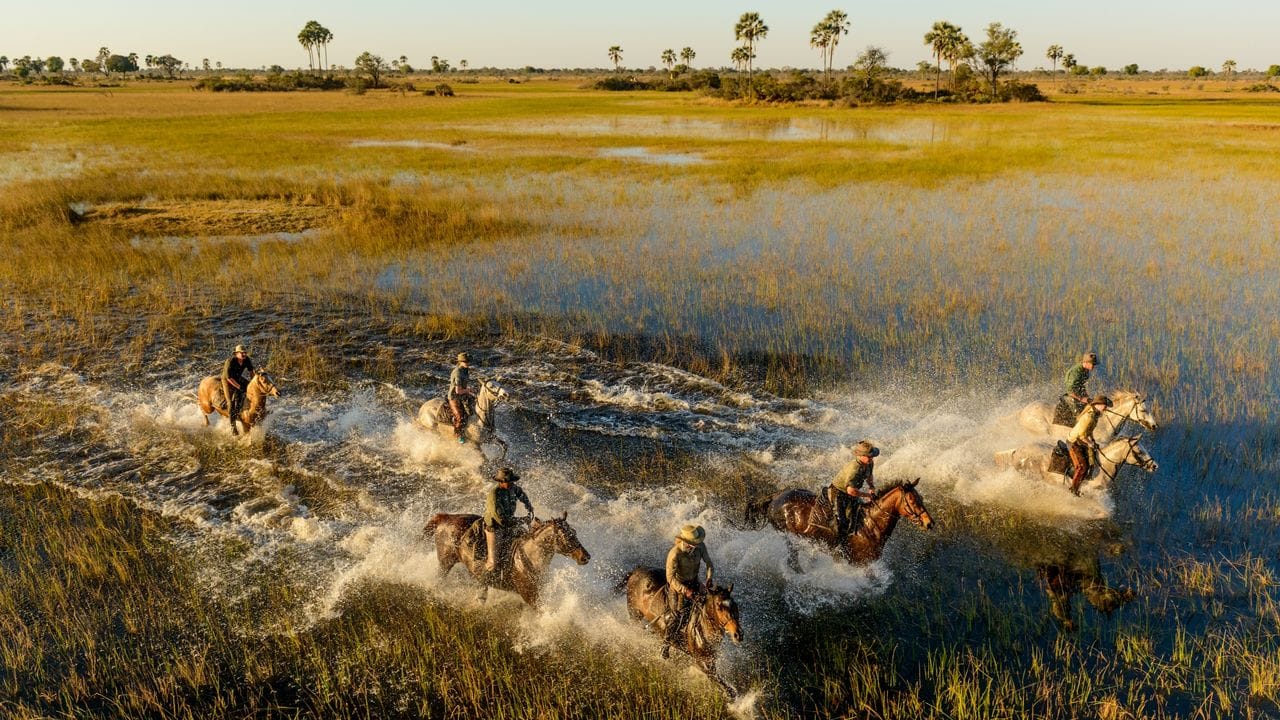
There is a version of safari that asks nothing of you except stillness and a telephoto lens. And then there is the version where you are cantering alongside a herd of zebra, their stripes fracturing in every direction, your horse's hooves barely audible against the grassland — and you realize you are not watching nature so much as moving through it. According to Vogue, horseback safari is the most wildlife-immersive, low-impact way to experience the African wilderness, and the case it makes is hard to argue with.
The logic is straightforward: horses belong in a landscape in a way that Land Rovers never will. They move quietly, carry a biological scent, and register to other animals as something familiar rather than threatening. Wildlife that would retreat from an engine holds its ground — or, in one reported instance at Kenya's Borana Conservancy, simply watches from a few feet away. A mother rhino and her calf. Two lions emerging from a thicket. A hyena idling past as if the riders were just another migration. The horses sensed the predators before the humans did, ears forward, bodies alert — no panic, just that particular held-breath intimacy that no game drive has ever delivered.
The Operators Rewriting What a Safari Can Be
The Borana Northern Ride — a newly opened route by African Horse Safaris connecting Borana Lodge to the Maasai-owned Il Ngwesi eco-lodge — traverses terrain that hasn't been linked on horseback in over a decade, crossing private conservation land and community-managed wilderness with equal fluidity. African Horse Safaris operates across 12 countries and personally vets every ride, matching riders to horses, guides, and terrain rather than just a destination. They've also tracked a significant year-on-year rise in solo women travelers booking independent riding journeys. Riding Safari Club, founded by equestrians Ginevra Rossini and Irene Ferrari, evolved from a WhatsApp group into a global collective; their Kenya programme at Suyian Conservancy integrates elephant protection fieldwork — tracking, collaring, corridor conservation — directly into the itinerary. For riders who want to be genuinely tested, Horseplorer (founded by Elodie Foltzenlogel) runs five-to-six-hour days across the Serengeti in migration season, an eight-day, nearly 300-kilometre Namib Desert crossing, and a Zimbabwe eco-safari where time out of the saddle might mean joining an anti-poaching patrol. Veteran operator Offbeat Riding Safaris covers up to 200 kilometres a week through the Masai Mara and Laikipia, in groups small enough to follow wildlife rather than a fixed route.
What unites all of it is the footprint — or the absence of one. No engine noise, no emissions, no roads required. Fly camps pitched by riverbeds. Roll-out beds under mosquito nets with the bush for a ceiling. Access to ecosystems that even the toughest 4x4 cannot reach. The conservancies these rides pass through are, in many cases, directly funded by the tourism they generate — Borana has maintained zero poaching for over a decade and runs round-the-clock monitoring of both black and white rhino populations.
If you've been treating safari as something you watch, horseback riding makes the radical suggestion that you might actually join it — and the wilderness, remarkably, will let you.
Read the original at Vogue.