The Truth About Lifting Weights While Pregnant Is the Opposite of What You’ve Been Told
Meet your myth-busting manifesto.
Reported by Women's Health Magazine.
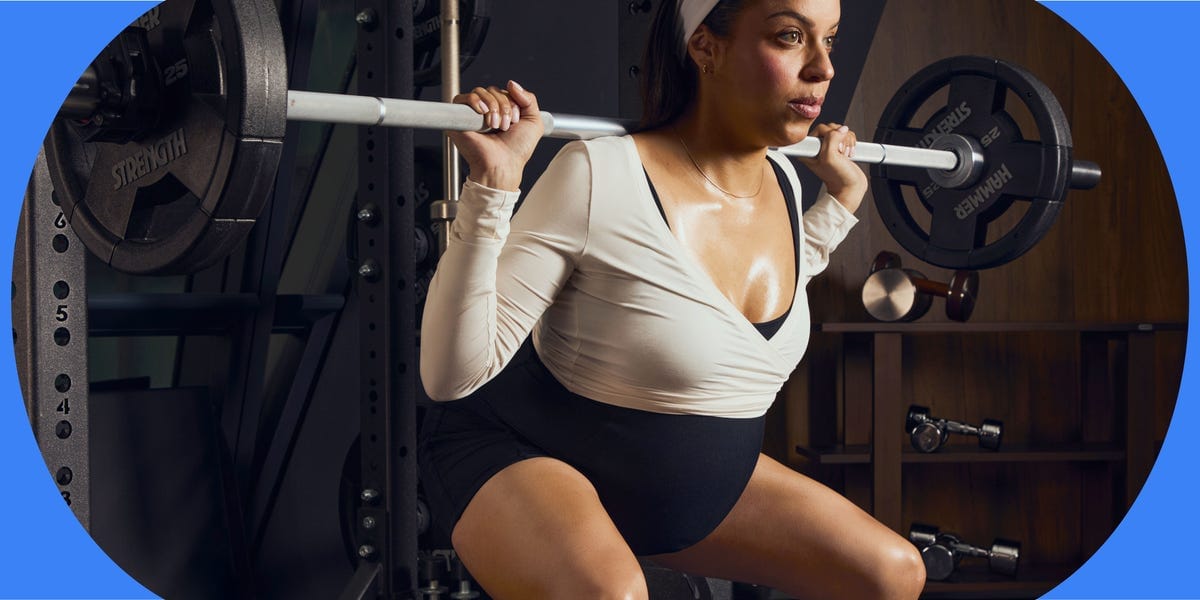
The old guard of pregnancy advice told women to sit still and protect themselves. Don't lift, don't strain, don't push—these warnings have haunted generations of pregnant people. But science has moved on, and it's time we all catch up. According to Women's Health Magazine, over a decade of research now confirms what feels counterintuitive to anyone who's been told to take it easy: strength training during pregnancy isn't just safe. It's beneficial—for both mother and baby.
The evidence is striking. Pregnant people who exercise see a 40 percent reduction in complications like gestational diabetes, preeclampsia, and gestational hypertension, says Margie Davenport, PhD, a kinesiology professor at the University of Alberta who chairs the Canadian Guidelines for Physical Activity in Pregnancy. There's also a 67 percent reduction in depression risk for those who stay active. The American College of Obstetricians and Gynecologists updated its guidance in 2020 to encourage regular aerobic and strength work throughout pregnancy and postpartum. None of the feared outcomes—miscarriage, small babies, early delivery—are supported by evidence.
Myth vs. Reality: What Actually Matters
The problem? Pregnancy exercise research has been chronically conservative, based on theoretical concerns rather than proof. Researchers had to prove safety before recommending activity, which meant decades of overly cautious guidance. Now, as Christina Prevett, PT, PhD, a pelvic floor physiotherapist at the University of Alberta, puts it: "Other than don't take a blow to the belly, we actually don't have a lot of hard rules." That 140 beats-per-minute heart rate cap from the 1980s? It was scrapped in 1994 with zero scientific basis—yet people still cite it weekly. Your resting heart rate naturally climbs during pregnancy as your heart works harder, but there's no magic ceiling. What matters is how you feel. High-intensity interval training actually reduces gestational diabetes risk and pregnancy complications overall.
Heavy lifting gets the same treatment. Occupational data showing risks came from warehouse workers lifting for eight-hour shifts with minimal recovery—not controlled strength training with proper form and rest. A 2024 study in the British Journal of Sports Medicine found that pregnant women tolerated heavy moves like back squats, bench presses, and deadlifts with no changes to fetal heart rate or blood flow. A 2026 study showed no increased miscarriage rates among people who continued Olympic-style weightlifting into pregnancy. As one maternal-fetal medicine specialist notes: if you lift your toddler during pregnancy, you're already managing significant load.
The real shift? Personalized recommendations replace blanket rules. Unless your doctor specifies otherwise—severe heart conditions, specific placental issues, active preterm labor—assume exercise is your baseline, not something requiring special permission. Listen to your body, skip anything that causes pain or dizziness, and let go of the outdated fear that movement threatens your pregnancy.
Read the original at Women's Health Magazine.


