This Cult-Favorite Lighting Design Studio Is Now Making Its Own Homewares
In Common With introduces its latest collection, Lido, which includes a collection of glassware—signaling an exciting foray into homewares for the sought-after lighting design studio.
Reported by Vogue.
There's a particular kind of design studio that resists easy categorization — not quite a lighting company, not quite a homeware brand, not quite a gallery, but operating with the quiet confidence of all three. In Common With, the New York-based studio founded in 2018 by Nick Ozemba and Felicia Hung, has always been that. The two met on their first day of art school — both studying furniture design — and built something that treats craft the way a serious chef treats ingredients: sourced with intention, never industrialized into meaninglessness. According to Vogue, Ozemba describes the distinction as "a TV dinner versus a home-cooked meal." In Common With is definitively the latter, just scaled.
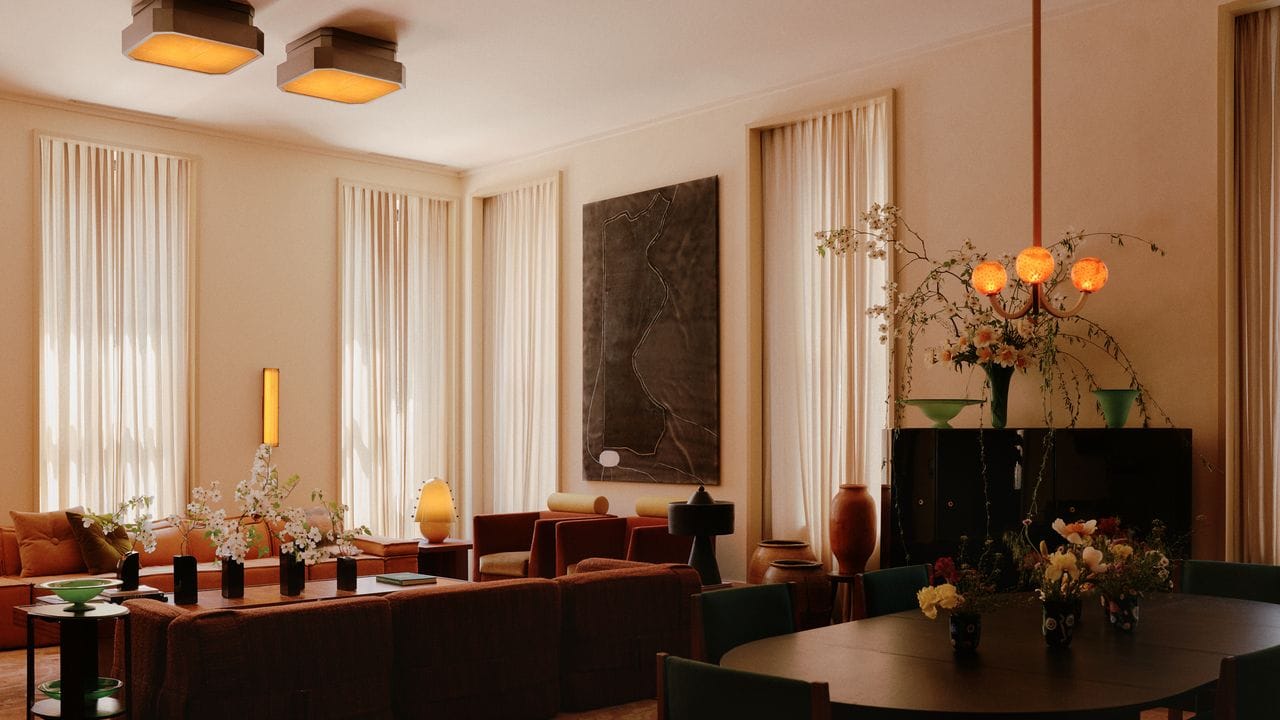
Their entry point was lighting — specifically, a modular manufacturing system that let them produce customizable sconces, pendants, and floor lamps for hospitality clients without drowning in inventory. The model was smart: assemble to order, build a flexible design language, keep quality high and pricing accessible. It worked. But Ozemba and Hung were always operating with a longer game in mind. Their Tribeca concept store, Quarters — housed in a 19th-century loft — became the proof of concept for a fuller world: vintage European furniture sourced from France, Italy, and Belgium; independent works by artists like Shane Gabier, who hand-glazes every tile in the space; and In Common With collections living in conversation with all of it.
Enter Lido
Now the studio has made its most significant move yet. The Lido collection is a collaboration with Venice-based glassware company Laguna~B — founded in 1994 by Marie Brandolini, now helmed by her son Marcantonio — and it marks In Common With's formal expansion into homewares. Laguna~B built its reputation on reinterpreting the goti de fornasa tradition, using leftover glass to produce drinking vessels in spontaneous, kaleidoscopic color. For Lido, the two studios combined that technique with murrine — layered, stretched glass canes pulled into intricate patterns — to create both lighting shades and an assortment of drinking glasses. Each piece is made by Murano master glassmakers, then finished and assembled at In Common With's Brooklyn studio. The result celebrates exactly what makes handcraft irreplaceable: no two pieces are identical, and that variation is the point.
The drinking glasses in the collection are intentionally priced for access — a deliberate move, Hung explains, to honor Laguna~B's core work while signaling what's coming next. Because Lido isn't a one-off pivot; it's an opening chapter. Ozemba and Hung have spent years building the manufacturing relationships and material knowledge to eventually produce furniture, glassware, and objects far beyond the lighting category that made them. Previous collaborations with designers like Sophie Lou Jacobsen and Danny Kaplan established the blueprint: find like-minded makers, create something neither could alone, and let the craftsmanship do the talking.
In Common With isn't chasing lifestyle-brand status — it's building something more considered: a complete design world anchored in material honesty, where a hand-glazed tile, a Murano pendant, and a drinking glass all speak the same language.
Read the original at Vogue.