Why Wellness Went Carnivore—and What It Says About Us
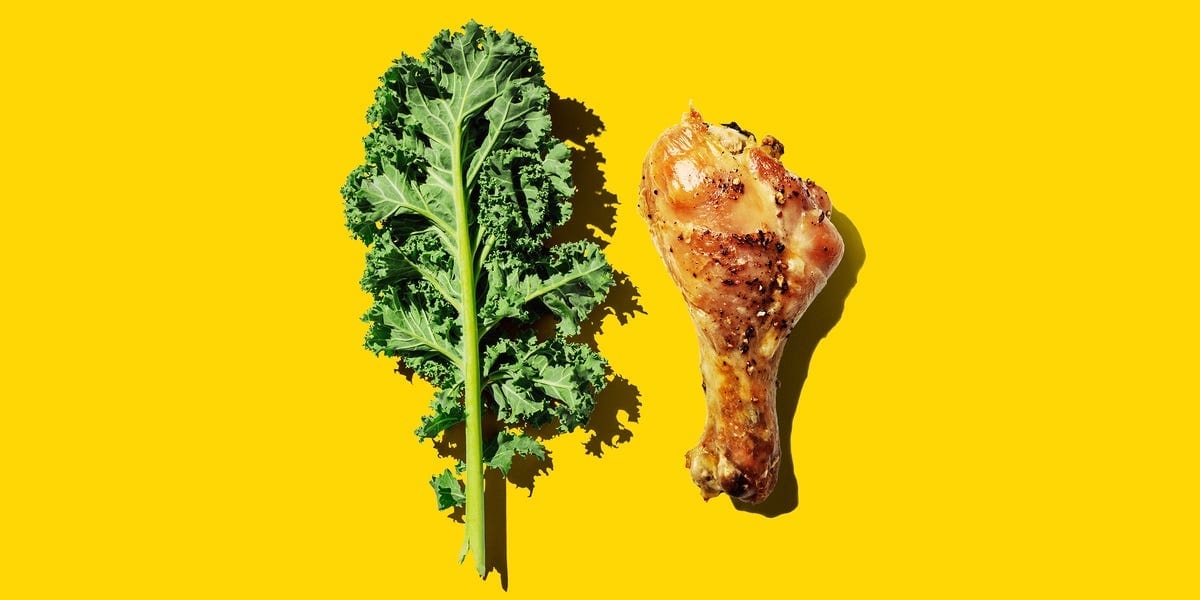
Goodbye kale smoothies, hello cow meat everything.
Reported by Women's Health Magazine.
The wellness industrial complex has always run on reinvention — and right now, it's running on beef tallow. The same influencer ecosystem that once evangelized green juice and cauliflower rice has pivoted, hard, to raw milk, organ meat, and grass-fed everything. Lauryn Bosstick of The Skinny Confidential, whose 2 million Instagram followers track her every biohacking habit, now fuels her dewy glow with bone broth, steak, and raw cheese. Hannah Neeleman, the Ballerina Farm founder with over 10 million followers, famously churns her own grass-fed butter and lathers it on, well, everything. The aesthetic hasn't changed — luminous skin, lean body — but the vehicle has completely shifted.
This didn't happen in a vacuum. According to Women's Health Magazine, U.S. meat consumption hit an all-time low in 2014, the same year oat milk was muscling cow's milk off shelves and Beyond Meat was on its way to a $234-per-share IPO. Eleven Madison Park went fully vegan in 2021. It felt like a tipping point. Then it tipped back. By 2022, plant-based meat and milk sales began slumping. By 2025, Americans are eating an estimated 24 pounds more red meat and poultry per person than a decade ago — and Eleven Madison Park has quietly announced plans to reintroduce animal products.
The Ultra-Processed Backlash Is Real — But So Is the Marketing Money
The science gave this reversal some legitimate scaffolding. A wave of research linking ultra-processed foods to obesity, cardiovascular disease, and depression prompted consumers to flip the label on their soy milk and plant-based patties — and what they found was a long list of emulsifiers, protein isolates, and industrial oils. Sociologist Josée Johnston, who co-authored the 2025 book Happy Meat, found that people increasingly view highly manipulated plant-based products with suspicion, while conceptually linking meat — especially from small-scale farms — to something "natural" and health-adjacent. Public health advocate Marion Nestle, PhD, MPH, is blunter about what else is at play: "There's so much dairy-funded research. They've sunk fortunes." Beef producers spent roughly $38 million on promotion and research in 2025; the dairy industry's marketing budget topped $120 million. Emily Ratajkowski, Kelly Ripa, and Charli D'Amelio are on the dairy payroll. That viral "wood milk" parody with Aubrey Plaza? Paid for by milk marketers.
Then there's the cultural layer that no campaign budget can fully manufacture. Johnston's focus groups surfaced something harder to quantify: people connect meat-based meals to identity, memory, and culture — and that's a grip that a pea-protein burger was never going to break. The flat taste of an Impossible Burger and the thin mouthfeel of oat milk haven't helped. Add in the rise of Robert F. Kennedy Jr.'s Make America Healthy Again movement, which has funneled a broad coalition of ancestral-eating advocates into a single, politically charged wellness narrative — one that promotes raw milk, animal fats, and preindustrial eating habits as correctives to modern chronic disease — and what emerges is a shift that's as much about ideology as it is about nutrition.
The carnivore pivot isn't simply a diet trend; it's a mirror — reflecting our collective distrust of processed food, our susceptibility to industry-funded messaging, and our deep, persistent need to believe that what we eat says something meaningful about who we are.
Read the original at Women's Health Magazine.