Why Zegna is All-In on America
Ahead of Zegna’s Spring/Summer 2027 show in Los Angeles, executive chairman Gildo Zegna sits down to speak about the region’s accelerated importance for the brand.
Reported by Vogue.
Awards season barely ended before Zegna had already claimed Chateau Marmont as its unofficial West Coast headquarters. The Italian house hosted a pre-Oscars dinner with nominee Stellan Skarsgård — who also starred in a Zegna-produced short film shot on the property — while Javier Bardem, Rami Malek, and a constellation of Oscar-adjacent names got dressed there. Now, Zegna has returned, converting the Chateau's cottages into Villa Zegna, its sixth branded residency concept following stops in Shanghai, New York, and Miami. The Los Angeles edition is, according to Vogue, the brand's biggest Villa Zegna investment to date.
The timing is not accidental. Executive chair Gildo Zegna is leaning hard into California — now one of the brand's strongest US markets — because the numbers demand it. Last quarter, Zegna brand revenues climbed 5.9% year-on-year to €310.3 million, with the Americas posting double-digit growth and representing 29% of group revenues. Gildo traces this momentum back to two pivots: the post-Covid shift toward luxury casual — less ceremony, more ease — and the 2021 NYSE IPO, which he says turned investors into customers and customers into investors. "It was a combination of things," he says, "and the fact that they happened very much in America."
The Long Game
Villa Zegna is invite-only and runs one week, but it is decidedly not a vanity play. Fifty tailors were flown in so top clients could order made-to-measure pieces from the Spring/Summer 2027 collection on the spot. The concept nods to villeggiare — the Italian tradition of summering in a villa — but Gildo is clear-eyed about what it actually is: a strategic client acquisition and retention tool. He credits a similar Dubai activation for the brand's resilience in the Gulf region, where much of luxury is currently struggling. "It's not that villeggiare is bullshit," he says, "but there is a business reason behind it." The ROI is slow-burn: build enough trust in a market, and shoppers seek you out wherever they travel.
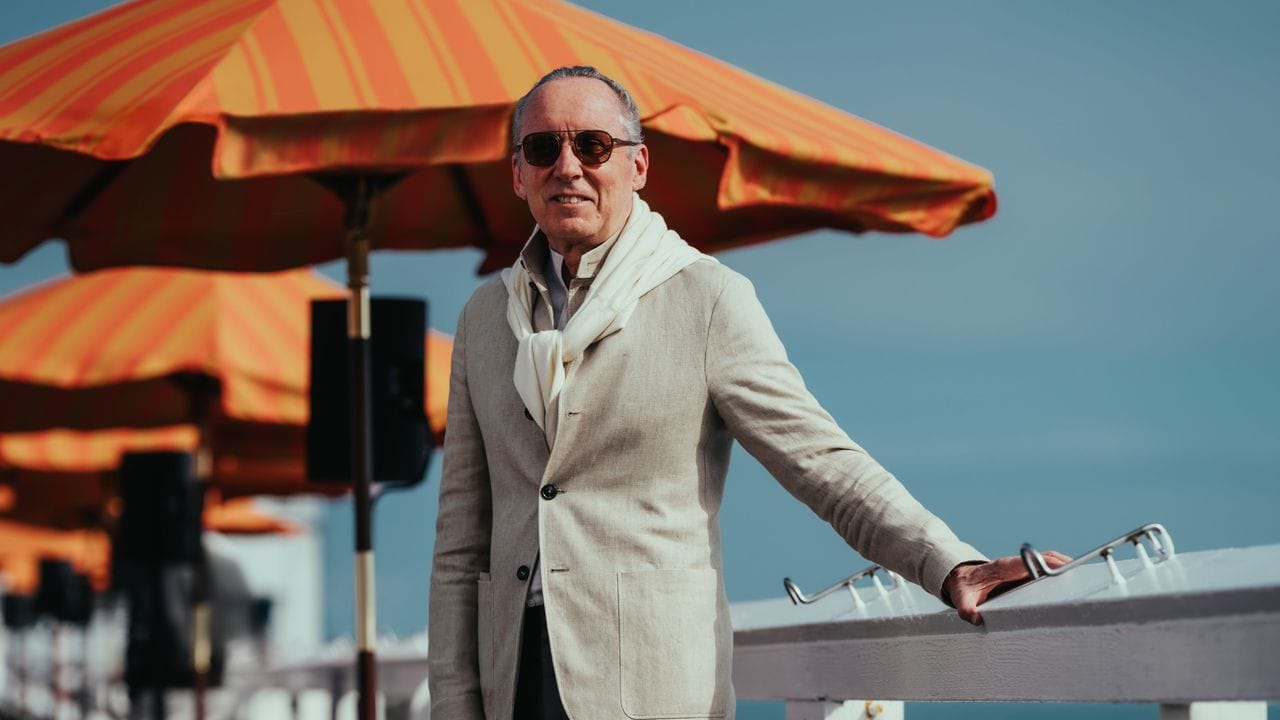
The Spring/Summer 2027 show itself played out at Malibu Pier — guests arriving to Aperol spritzes and burnt-orange picnic seating — and the collection delivered on the brand's casual-luxe promise without sacrificing ambition. Leather shirting, woven suede sweaters, seersucker suiting, and a recurring chore jacket in saffron and teal looked like something from The Talented Mr. Ripley rerouted through a Pacific Coast weekend. Zegna is also eyeing expansion into Scottsdale, San Diego, Palo Alto, Palm Beach, Las Vegas, Dallas, and Houston. And for its American-born labels — Thom Browne (revenues down 9.4% last quarter) and Tom Ford Fashion (up just 0.4%) — Gildo's growth thesis is equally blunt: "America, America, America."
When American consumers travel, Gildo argues, European luxury resorts fill their rooms with them — locals simply cannot afford those prices — which means keeping the US customer engaged is not optional for any brand with global ambitions. California is just where that strategy currently has the most runway.
For Zegna, betting on America isn't a trend play — it's the entire architecture of the next decade.
Read the original at Vogue.