Willy Chavarria on the Power of Sincerity
The designer spoke to Nicole Phelps at the Vogue Business Global Summit about his global expansion plans, the hard launch of a handbag collection, and bringing the worlds of fashion and music closer together.
Reported by Vogue.
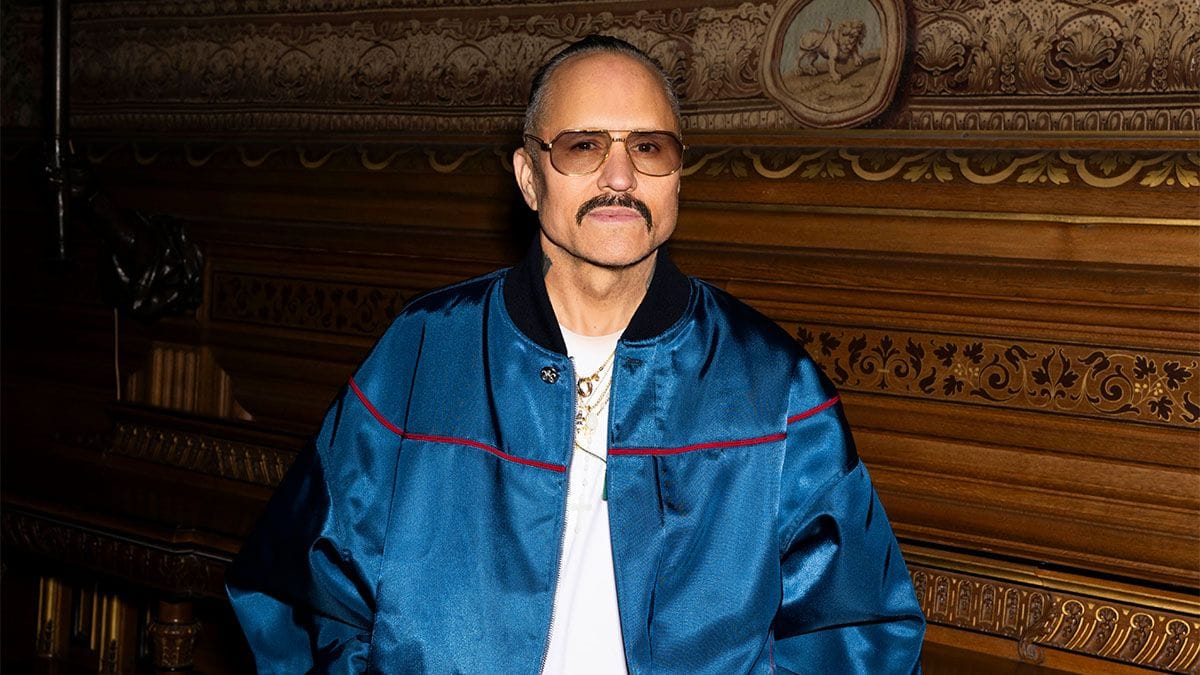
On May 3rd, while the fashion world air-kissed its way through the Met Gala, Willy Chavarria was in Huron, California — the San Joaquin Valley farming town where he grew up — accepting a day named in his honor. The gesture was completely on-brand for a designer whose entire identity is inseparable from the working-class Mexican American community that raised him. According to Vogue, that sincerity isn't just a narrative device; it's the architecture of a business that has spent a decade quietly becoming one of fashion's most compelling stories.
Chavarria launched his label in 2015, but the cultural moment that put him on the map came in September 2021, when he sent five shirtless Latino men down the runway in exaggerated wide-leg chinos — silhouettes blown up to ball gown proportions, with colorful satin boxers visible at the waist. The looks landed in the Met's In America: An Anthology of Fashion exhibition the following year. The point was explicit: Chicano and Latin culture rendered in the language of luxury, a translation that hadn't really existed before. "There's a sincerity that's new," Chavarria said — and the industry noticed. Paris shows followed. A minority investment from the Middle East's Chalhoub Group closed last October. A sold-out Zara collaboration dropped this past March under the invented word Vatisimo — derived from vato, Chicano slang for a community builder — and the women's line moved before the men's.
Fashion as Infrastructure
What separates Chavarria from designers who simply have a good story is his instinct to treat culture as a business category. He's not chasing celebrity dressing — he dressed Mexican boxer David Benavidez because entering the ESPN sports ecosystem, with its millions of viewers, felt as strategically valuable as any runway placement. His collaborators include Billie Eilish, Kendrick Lamar, and J Balvin — the last of whom he's made music with, not just dressed. The vision is a deliberate collapse of the boundaries between fashion, music, art, and sports, treated not as a mood board but as a revenue model. Chalhoub brings retail expertise; his other investor, Sarah Stennett of FAE Group, brings music infrastructure. The overlap is the whole point.
Stores are next: New York within twelve months, then Paris, LA, and Tokyo — a city that, notably, was his first market. Before Barneys, before New York wholesale, a Japanese distributor called Bay Crews picked up the line from a small Sullivan Street shop. The brand's message — identity, human dignity, the right to be seen — has always translated further than its American references might suggest. When Chavarria talks about what cuts through globally, he's not talking about aesthetics alone. He's talking about people buying into a position. The product is the proof of concept; the stance is the brand.
In a moment when a lot of fashion people are hedging, going quiet, calculating the cost of having a point of view, Chavarria's trajectory suggests the opposite math is worth considering.
Read the original at Vogue.