Adidas Revenues Rise 14% as Brand Celebrates Marathon Win
The German sportswear giant reported a strong first quarter — and that was before its big London Marathon weekend.
Reported by Vogue.
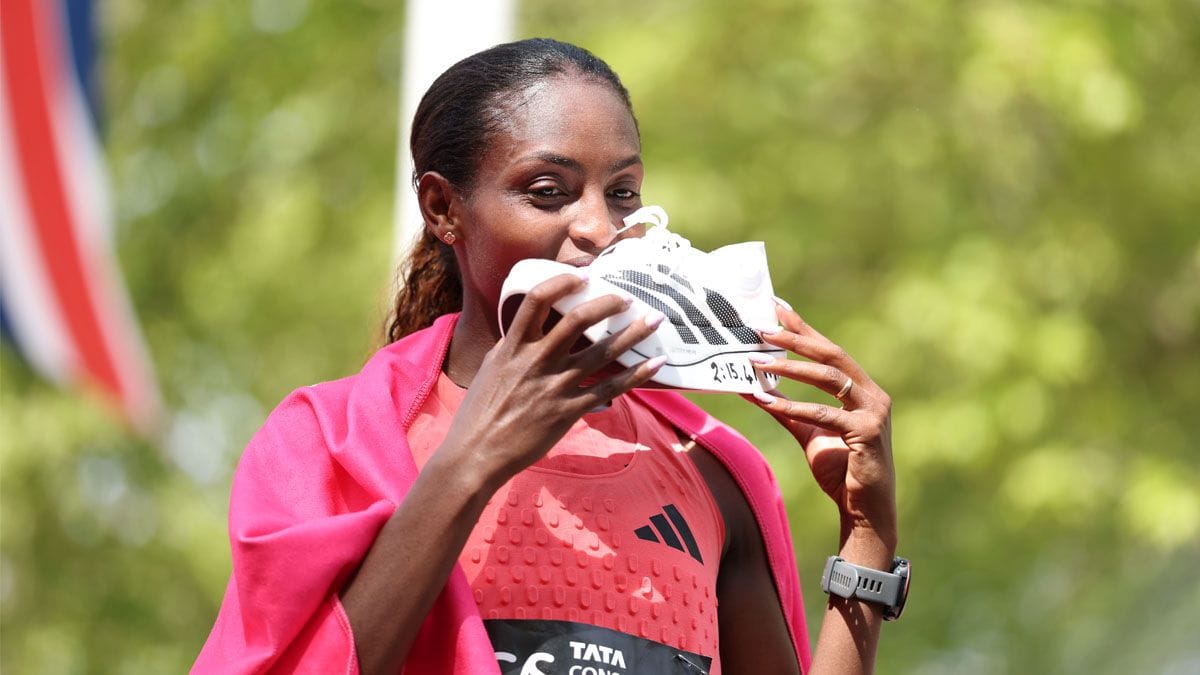
Adidas just posted a 14% revenue jump to €6.6 billion in its first quarter, and the brand is making zero attempts at humility about it. The surge comes off the back of a masterstroke of sports marketing: outfitting the top three finishers at the London Marathon, including both sub-two-hour male runners and Tigist Assefa, who shattered the women's world record in 2:15.41. All three wore Adidas's new Pro Evo 3 supershoe—a flexing opportunity the company is milking for all it's worth, complete with a documentary dropping the day after earnings were announced.
CEO Bjørn Gulden didn't shy away from the victory lap. "I hope you accept that we brag a little bit," he told investors, framing the marathon sweep as validation of years of R&D and athlete partnership. The real story, though, isn't just one weekend. It's that Adidas is finally making good on its promise to pivot from lifestyle brand back to performance powerhouse. According to Vogue's report on the earnings call, performance revenues jumped 29% year-over-year, driven by 49% growth in soccer, 28% in running, and 12% in training. Even motorsport surged 79% after Adidas locked in a new partnership with Audi. "The plan was to shift the growth also to performance," Gulden said pointedly, essentially telling skeptics who doubted the brand's innovation pipeline: watch this.
Geography matters—a lot
The growth isn't evenly distributed, and that's telling. Greater China climbed 17%, Latin America shot up 26% (buoyed by World Cup momentum), and Japan and South Korea rose 23%. North America, Adidas's biggest opportunity, grew 12% despite consumer jitters over high oil prices. Europe's 6% gain suggests market saturation, while the Middle East has become a cautionary tale—Gulden admitted the brand is "losing business" in those regions due to the ongoing conflict, a headwind that could linger depending on how long tensions persist.
Direct-to-consumer revenues were especially strong at 22%, while wholesale inched up 8%. Within categories, apparel led the charge at 31% growth, accessories at 13%, and footwear at 4%—a more modest figure that hints at competition in the shoe space despite the marathon hype. Gulden's message to investors was clear: the company is balancing its lifestyle and performance bets, and 2026—the final year of its "Own the Game" growth plan—will be defined by the World Cup, where Adidas has 14 teams and effectively the whole pitch.
When a sports brand wins this publicly and this decisively, it's not just about revenue—it's about narrative reclamation.
Read the original at Vogue.