Every Movie We’re Keeping Our Eye On at Cannes
The festival kicks off this week with European provocateurs, an erotic slasher film (or two), and lots of Léa Seydoux
Reported by Harper's Bazaar.
Cannes has always been where cinema goes to surprise you — where a Palme d'Or can go to a film about a woman who is sexually attracted to a car, or a sweeping meditation on Texas, family, and the literal cosmos. The 79th edition, running May 12 through May 23, keeps that tradition gloriously intact. According to Harper's Bazaar, this year's slate is notably light on big Hollywood names — and somehow still overflowing with star power and provocation.
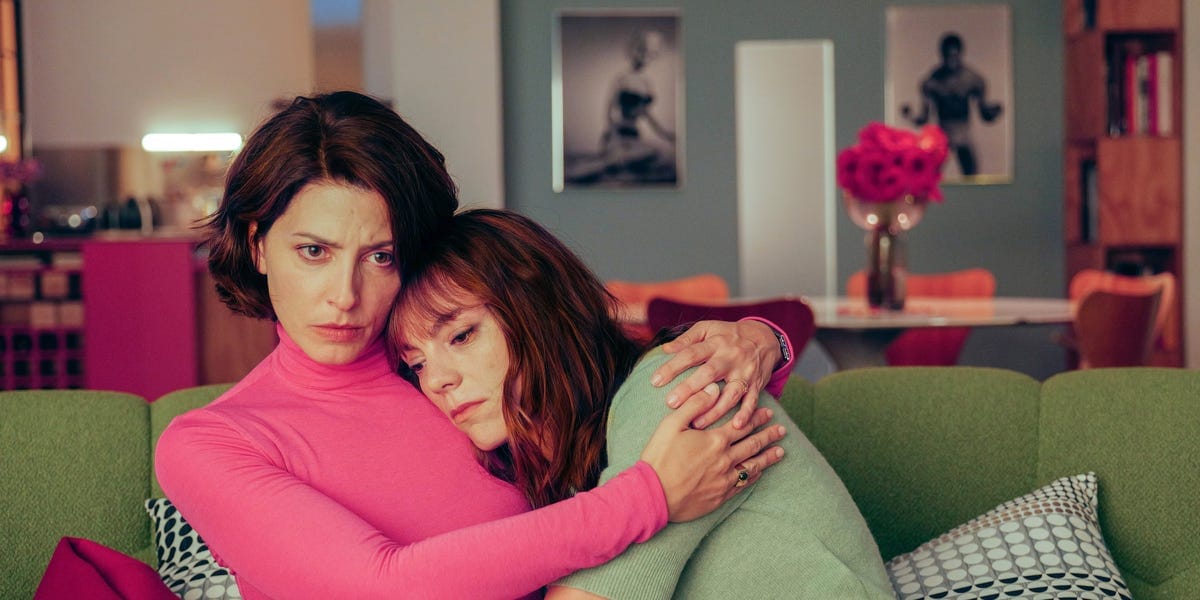
The films worth circling first: Pedro Almodóvar returns with Amarga Navidad (Bitter Christmas), a metatextual grief story set across two timelines — 2004 and 2025 — in which an advertising director mourning her mother becomes the subject of a script written by a filmmaker who is, unmistakably, Almodóvar himself. Jane Schoenbrun's Teenage Sex and Death at Camp Miasma stars Emmy winner Hannah Einbinder as a queer director hired to relaunch a slasher franchise, only to spiral into a psychosexual entanglement with the original franchise's final girl, played by Gillian Anderson. Schoenbrun has described it as Portrait of a Lady on Fire set inside a Friday the 13th sequel — which tells you everything and nothing at all.
The Contenders Worth Watching Closely
The Palme d'Or conversation starts early with James Gray's Paper Tiger, a thriller about two brothers (Adam Driver and Miles Teller, following a casting reshuffle that swapped out Jeremy Strong and Anne Hathaway) who chase the American Dream into a dangerous arrangement with the Russian mob. Scarlett Johansson also stars, reuniting with Driver for the first time since Marriage Story — the producer has already called it Gray at his finest. Meanwhile, Arthur Harari's The Unknown — a body-swap psychological fantasy loosely adapted from a graphic novel — brings Léa Seydoux into what promises to be her wheelhouse after The Beast, opposite Niels Schneider. Harari co-wrote last year's Palme winner Anatomy of a Fall and took home the Oscar for Best Screenplay in 2024; the pedigree here is serious.
Two films carry the heaviest emotional weight. Christian Mungiu's Fjord — his first English-language feature — stars Renate Reinsve and a barely recognizable bald Sebastian Stan as a Romanian-Norwegian couple whose relocation to a fjord town with their five children fractures along ideological fault lines with their new neighbors. And Ben'Imana, the first Rwandan film ever selected for the Cannes Official Selection, arrives after six years in production from debut filmmaker Marie-Clémentine Dusabejambo. Set nearly two decades after the 1994 Tutsi genocide, it follows a survivor who advocates for reconciliation courts — until her daughter's pregnancy forces her to confront everything she's built her justice on.
Nicolas Winding Refn re-emerges after nearly a decade with Her Private Hell, a neon-soaked horror set in futuristic Tokyo featuring Sophie Thatcher, Charles Melton, and Havana Rose Liu — described as delivering "lots of glitter, sex, and violence." Bertrand Mandico's Roma Elastica, a hypersurreal tribute to Italian cinema starring Marion Cotillard, rounds out a program that proves Cannes doesn't need Hollywood to be essential — it just needs to be itself.
This year's Cannes is a reminder that the most interesting cinema is still happening at the edges — weird, ambitious, and completely unwilling to make it easy for you.
Read the original at Harper's Bazaar.