Isaac Mizrahi Is Target’s First Creative Director at Large
The designer is reuniting with the big-box retailer, more than two decades after their initial fashion design collaboration defined the format in 2002.
Reported by Vogue.
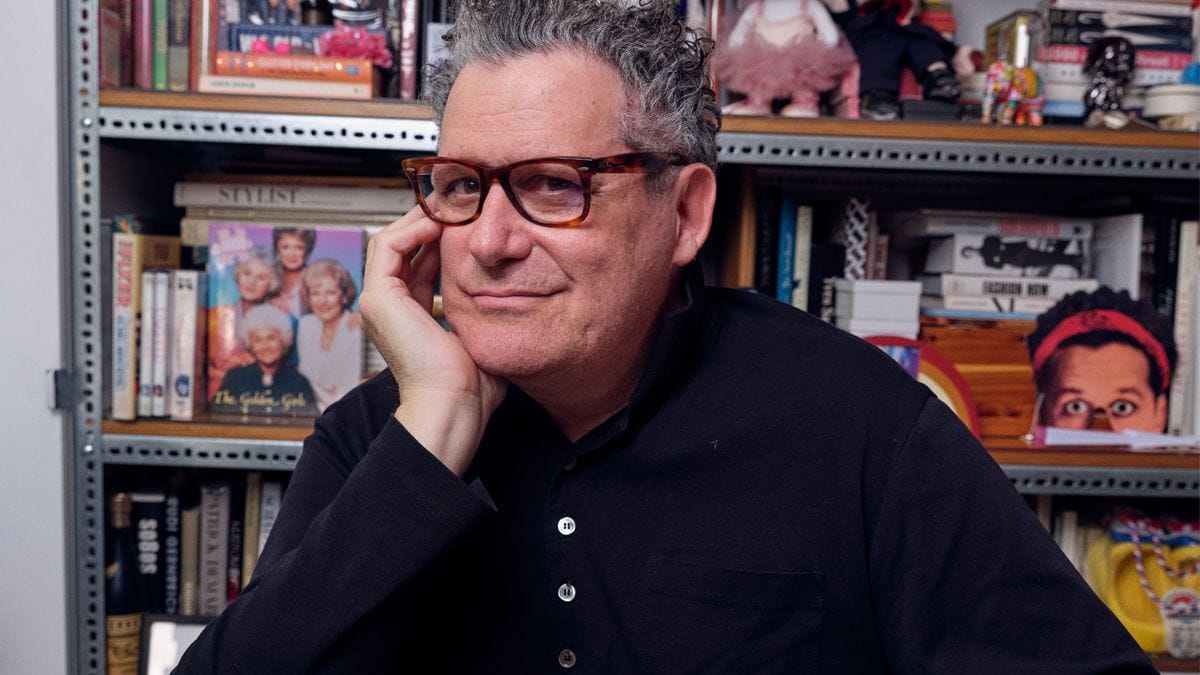
Isaac Mizrahi is coming home. According to Vogue, the designer has been appointed Target's first-ever Creative Director at Large — a newly invented title for a retailer that, frankly, has been coasting on a legacy it helped create and then slowly let go dormant. Mizrahi was Target's original fashion collaborator back in 2002, the architect of the high-low dressing philosophy that every brand from H&M to Uniqlo now treats as gospel. "You don't have to spend $8,000 on a sweater for it to be amazing," he says. "A good sweater can be $45. Target invented that — we did that."
His new role isn't about designing product. It's bigger and, arguably, harder: Mizrahi will advise Target's internal design teams, mentor emerging talent, and shape the creative direction across fashion, home, food, and wellness. Think less pencil-to-sketchbook, more cultural compass. He'll work closely with Gena Fox, Target's recently promoted SVP of Design, and report into Chief Merchandising Officer Cara Sylvester, who puts it plainly: "He's going to bring an external perspective on trends, creativity, and culture to really help us push the thinking in that product creation phase."
The Bigger Picture: Fashion Credibility Is Now a Retail Strategy
Mizrahi's appointment isn't happening in a vacuum. Designer-retailer relationships have gotten increasingly serious — John Galliano with Zara, Zac Posen embedded full-time at Gap Inc., Francesco Risso and Clare Waight Keller signed to Fast Retailing's GU and Uniqlo respectively. These aren't one-off collabs; they're structural commitments. And they make business sense on both sides: the designer gets mass visibility, the retailer gets genuine fashion credibility. Target needs both right now. The company posted a 1.7% sales decline in 2025, landing at $104.8 billion, and new CEO Michael Fiddelke — who took over from longtime executive Brian Cornell in February — is in active turnaround mode. Sylvester is direct about it: apparel "has not been strong for us over the last few years."
The fix isn't just about landing one splashy annual collab. Target's strategy leans toward a steady drumbeat of smaller drops tied to social media moments — think its recent Parke sweatshirt collection, which caused queues and sold out fast. Mizrahi will plug into that rhythm year-round. And the assignment is essentially to restore Target's personality. "In a sea of algorithms, consumers want distinction," Sylvester says. Her gut-check for merchants: if you could be anywhere else in any other store, it's not distinctively Target. Mizrahi's vision tracks: "There was always a little bit more humor at Target. It just needs to be expanded upon."
For Mizrahi, this is also a vindication. When he first went mass-market, a customer told him they'd never buy his clothes again — he calls it "one out of a thousand." The other 999 proved that democratizing design wasn't a compromise. It was the point all along.
If Target can lean back into the irreverence and accessibility it pioneered, Mizrahi — the man who wrote that playbook — might be exactly the right person to remind them how.
Read the original at Vogue.