Once It All Seemed Like Countryside by Simona Pampallona
A project exploring the complex relationship between humans and animals in the province of Grosseto, where the line between wild and domestic blurs.
Reported by Vogue.
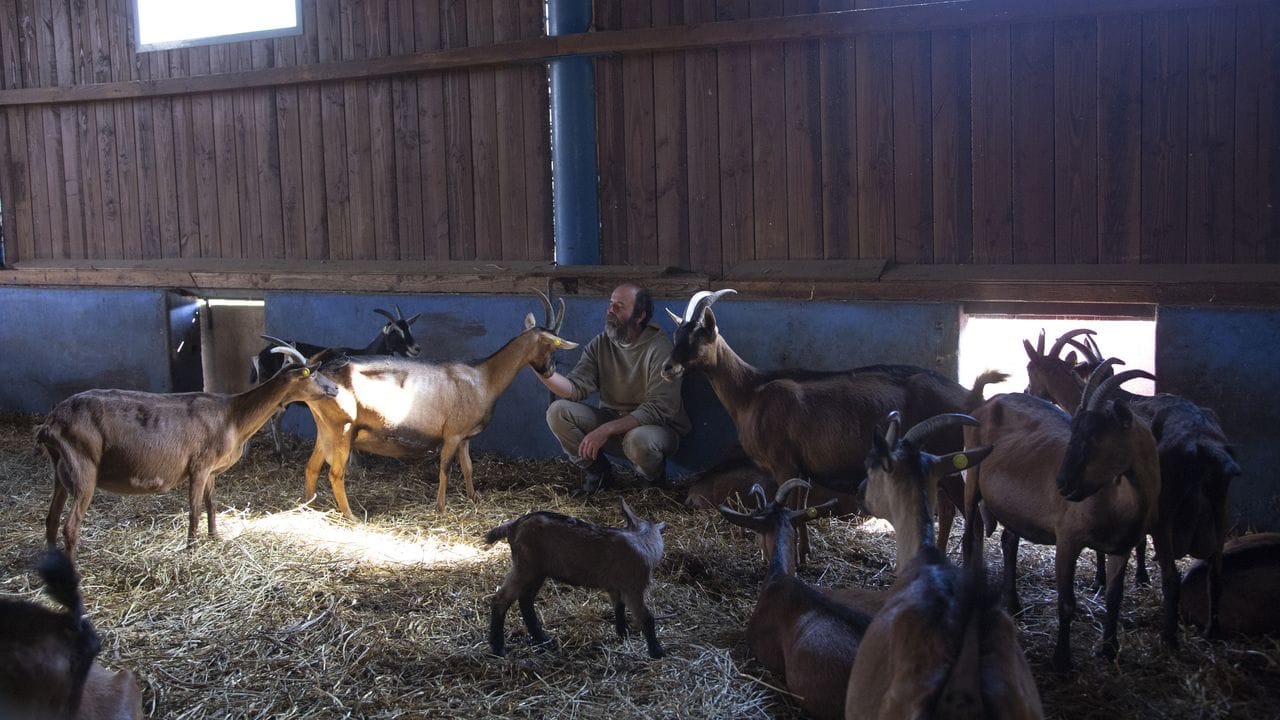
Europe is getting wilder — literally. Wildlife populations across the continent have grown by roughly 40% over the past fifteen years, driven by stricter protection laws, rural depopulation, and shifts in farming practices, according to Vogue. For photographer Simona Pampallona, that statistic isn't an abstract conservation win. It's the entire atmosphere of her new project, Once It All Seemed Like Countryside — a portrait of Tuscany's Grosseto province as nature slowly, stubbornly takes back what humans left behind.
Grosseto is agricultural country: aging villages, shuttered industries, and wide stretches of farmland that have quietly reverted to forest as younger generations leave for cities. It also happens to contain nature reserves, a hunting reserve, and an expanding woodland that exists not by design but by default. The landscape looks pastoral. The reality is considerably stranger.
Wild Doesn't Mean What It Used To
The animals reclaiming this territory are themselves hybrids of a kind. Wolves — once nearly extinct in Italy — have rebounded and begun breeding with dogs, blurring the line between wild predator and domestic animal. Local shepherds describe a new aggression in these animals that feels different from anything historically documented. Meanwhile, Grosseto's wild boar population has been reshaped by the large-scale introduction of Hungarian specimens and crossbreeding with domestic pigs. Even the deer are imports: fallow and roe deer from other European countries were introduced in the 1970s for their reproductive ease, and they have since replaced the native populations. European research initiatives are now scrambling to study what these new hybrids actually are.
Pampallona's project holds all of this tension without resolving it. Forests advance over abandoned farmhouses. Fallow deer appear where livestock once grazed. The pastoral and the feral are no longer opposites — they're overlapping, interbreeding, negotiating territory in real time. The boundary between wild and domestic, it turns out, was always more fragile than the mythology of the countryside suggested.
What Once It All Seemed Like Countryside ultimately argues — quietly, through image and context — is that rewilding is not a return to some pristine original state. It's something messier, more hybrid, and more human-shaped than the word implies. The wilderness coming back to Grosseto was partly made in the 1970s, partly the result of economic collapse, and partly the consequence of animals doing what animals do when we stop paying attention. That's not a conservation failure. It's just what nature actually looks like when you stop romanticizing it.
The wild is back — but it's been changed by us, and the line between nature and culture in the European countryside is now too tangled to pretend it was ever clean.
Read the original at Vogue.