Round Cut Engagement Rings: What to Know About the Classic Diamond Shape
Round cut engagement rings are one of the most timeless and popular diamond shapes for a reason. We break down all you need to know about this classic cut.
Reported by Vogue.
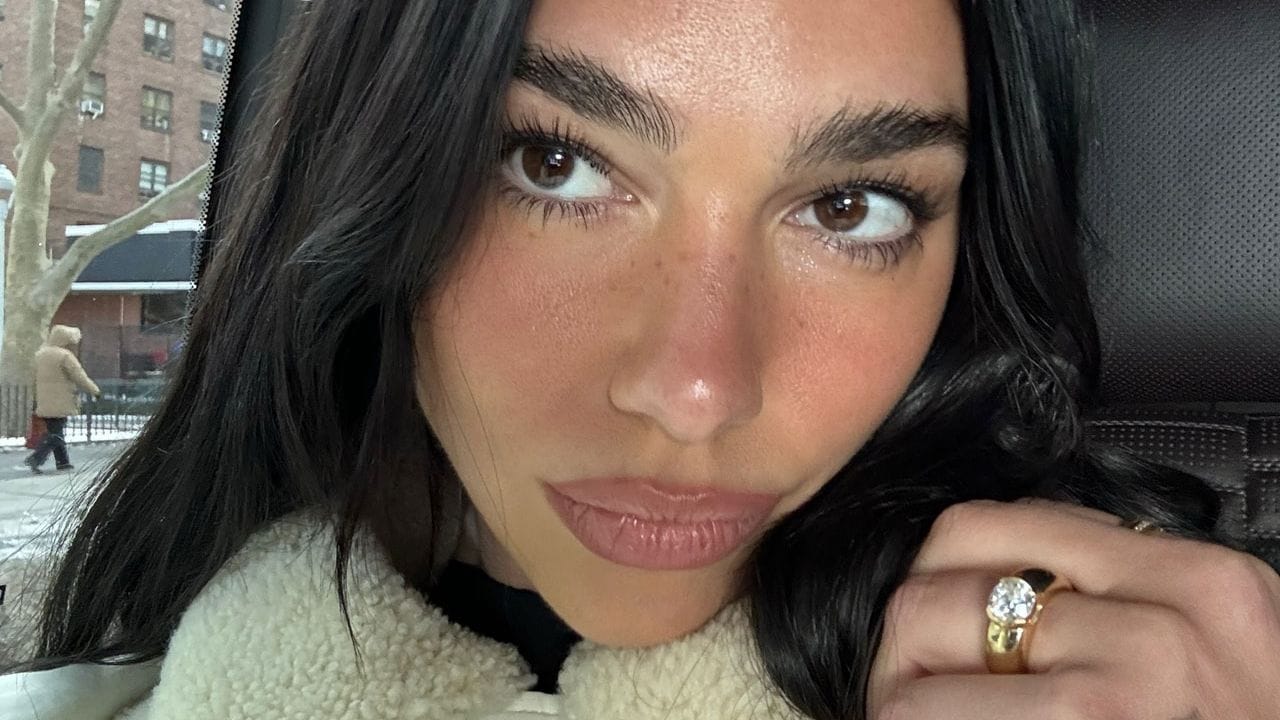
Round cut engagement rings have never needed a rebrand. The shape predates the modern jewelry industry entirely — early Mazarin and old mine cuts established the round diamond's dominance long before the round brilliant was formally developed in the early 1900s — and today it still accounts for the majority of engagement rings sold worldwide, according to Vogue. Emily Blunt, Barbra Streisand, and Dua Lipa all said yes to round cuts. So did Queen Elizabeth II, who wore a three-carat solitaire (built, remarkably, from Princess Alice's repurposed tiara) from her 1947 engagement until the end of her life. The company is good.
The engineering behind the sparkle is genuinely impressive. A round brilliant diamond has approximately 58 facets, each positioned to maximize light refraction. "The round brilliant is perhaps the closest thing jewelry has to a masterpiece of engineering," says Eddie Le Vian, CEO of Le Vian — a jewelry house with roots in the 15th century. "Nature creates the diamond, but over more than a century, artisans have continuously refined its proportions to maximize brilliance, light performance, and fire." The circular form also carries weight beyond optics: historically, the shape has symbolized eternity, which makes it romantically loaded in a way that, say, a kite cut simply isn't.
Buying Smart: The 4Cs and What Actually Matters
The GIA grades round brilliant diamonds in their own category, and all four Cs — cut, color, clarity, and carat weight — apply. But Le Vian is clear on which one to prioritize: cut is the soul of the stone. "Two diamonds can have identical carat weights and grades on paper, yet perform entirely differently once they touch light," he explains. A well-cut round diamond can appear larger and more luminous than a heavier stone with lazy proportions. His actual advice: stop chasing carat weight. "A diamond without life can feel surprisingly flat." Look at how the stone moves under light — does it have energy, does it pull your attention — before you let a certificate make the decision for you.
On the setting question, the round brilliant is essentially the white button-down of diamonds: it works with everything and reads differently depending on how you style it. A minimal solitaire on a plain band is as relevant as ever. Bezel settings are having a moment for a reason — they're sleek, modern, protective. And if you want more drama, baguettes, pavé halos, or side stones all integrate seamlessly. "The setting becomes the personal signature around a timeless center," says Le Vian. Vintage-inspired silhouettes are pulling in one direction; quiet luxury minimalism is pulling in another — and the round cut handles both without breaking a sweat.
The round brilliant has outlasted every diamond trend of the last century because it was never really a trend to begin with — it's the baseline against which every other cut gets measured.
Read the original at Vogue.