The Mysterious Martin Margiela is Selling His Archive
Wigs, graffiti
Reported by Harper's Bazaar.
Fashion has a long history of mythologizing its designers, but few have earned the mystique quite like Martin Margiela — a man who gave interviews through fax, never showed his face at his own runway shows, and built one of the most influential houses in modern fashion on the principle that anonymity is its own kind of power. Now, according to Harper's Bazaar, the reclusive Belgian designer is doing something almost unthinkable: selling his personal archive.
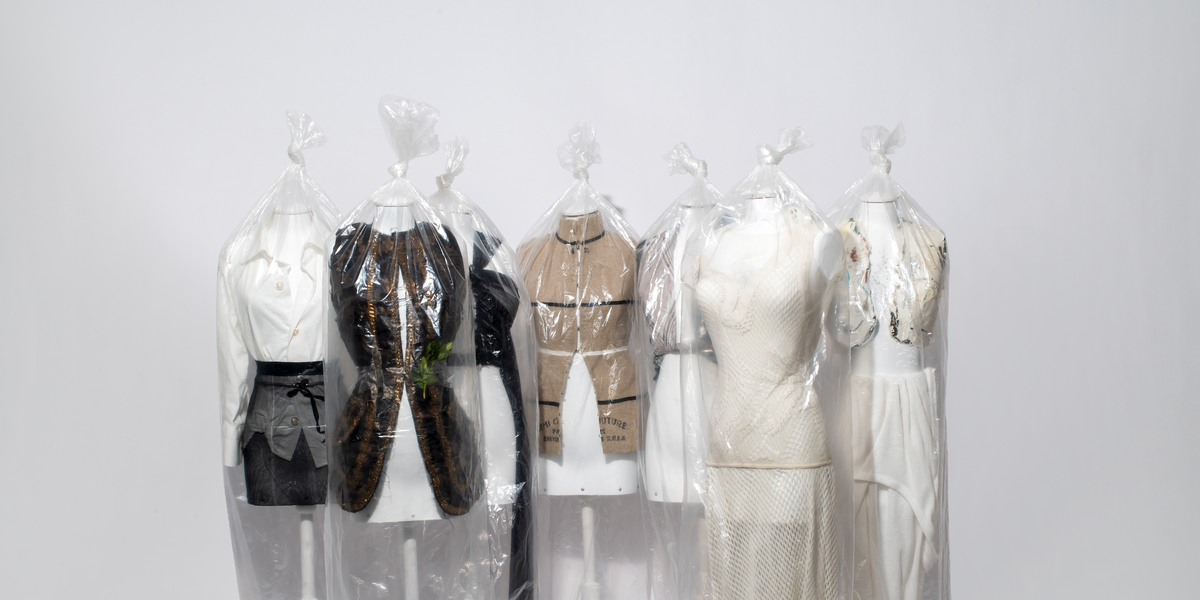
The collection reads like a physical diary of an obsessive creative mind. There's the 1988 Vareuse shirt — a deep-plunge riff on a French sailor's top that became a house signature across jackets, dresses, and knitwear — and the Tabi boot, that split-toe provocation born from a memory of Japanese street workers, which Margiela kept presenting season after season despite universal rejection. "Nobody liked them," he notes plainly. Nearly 40 years later, they're still in production. Vindication, slow-cooked.
The Mythology Is in the Details
What makes this archive genuinely fascinating isn't just the garments — it's the objects in between. A telephone from 1988, painted white because Margiela refused to follow the Japanese minimalists into grey concrete and black furniture. ("Everything had to be roughly painted white," he explains — walls, floors, furniture, televisions, and yes, the phone, on which he also wrote his own number because he kept forgetting it.) A first design dossier from 1987, stolen on a train and then recreated from memory, only for police to recover the original — and Margiela to discover how nearly identical the two versions were. There are Barbie dolls he dressed in 1989, lost at an exhibition, and painstakingly recreated during COVID lockdown because, he admits, he never got over losing them.
Then there are the veils — sheer face coverings used on models from 1988 through 2008, designed not for drama but for erasure. "All the attention is purely focused on the clothes without any distraction of the person's face," Margiela explains. For a designer who spent his entire career refusing to be seen, the gesture reads as both aesthetic philosophy and self-portrait. His Hermès knitwear, which he helmed from 1997 to 2003, operates on the same logic: no fastenings, no fussy details, just "the beauty of luxurious materials in fluid shapes" — luxury defined as the balance of quality, comfort, and timelessness, nothing more.
This archive isn't a vanity project or a brand cash-grab; it's the closest thing to a memoir we're likely to get from a man who has spent decades expertly refusing to explain himself — and it turns out, the objects say everything.
Read the original at Harper's Bazaar.