The Pros, the Cons and the Future of At-Home Beauty Devices
Once confined to clinics, advanced beauty treatments are now entering the home, raising new questions around efficacy and safety.
Reported by Vogue.
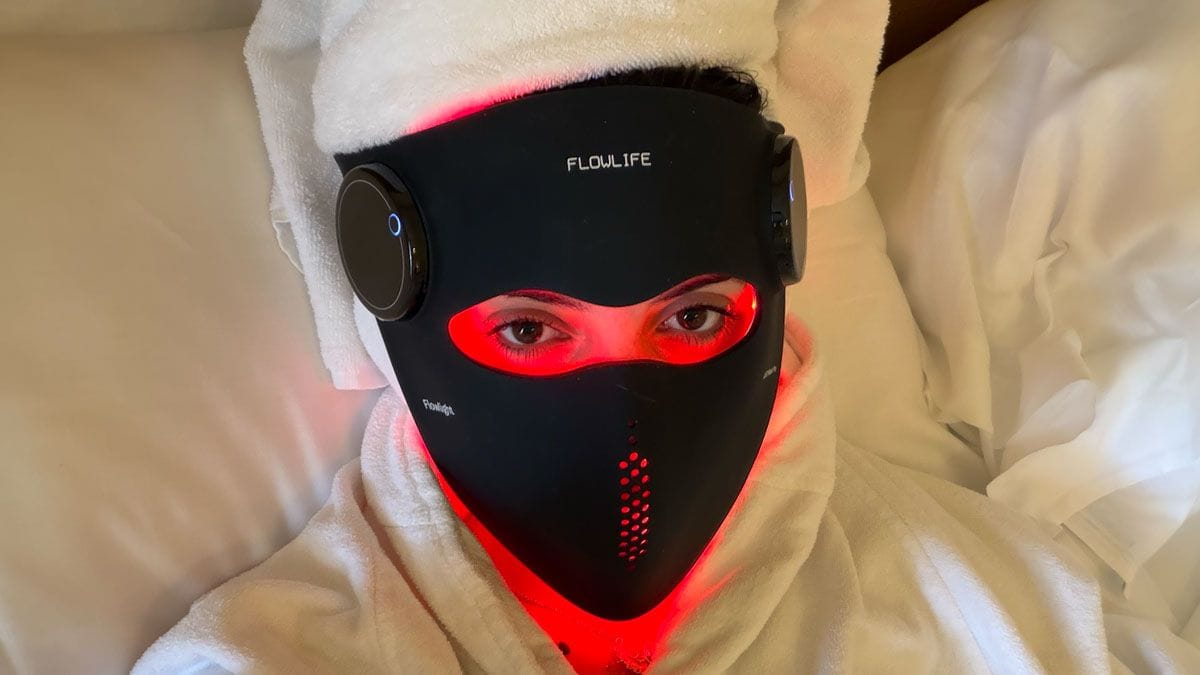
The LED mask that once felt like a sci-fi prop is now just another item between your moisturizer and your toothbrush. What started as clinic-only technology has become a bathroom shelf staple — and the industry is nowhere near finished expanding. According to Vogue, the global at-home beauty device market is currently valued at $14.4 billion and is projected to hit $21.85 billion by 2030, driven by consumers who want dermatologist-level results without the appointment calendar or the recurring bill.
The category has moved well past LED and microcurrent. Radiofrequency devices, at-home microneedling pens, sleep tech, and NAD+ injectable tools are all entering the consumer market — and they're bringing clinical-grade ambition with them. That ambition is exactly where the conversation gets complicated. "Once you are penetrating the skin, injecting substances, creating controlled injury or trying to remodel tissue, you are no longer simply 'doing skincare' — you are performing a medical or quasi-medical procedure," says Dr. Michael Moore of London clinic Dr. Dray. His point cuts to the core of the whole category: the marketing sells the device, but the real expertise lives with the practitioner.
The next frontier: needles, radio waves, and your sleep data
NAD+ — nicotinamide adenine dinucleotide, a coenzyme involved in DNA repair and cellular energy — has become a genuine cultural moment, boosted by Hailey Bieber, Gwyneth Paltrow, and Jennifer Aniston. The global NAD+ market was valued at $184 million in 2022 and is projected to reach $655 million by 2028, growing at a 23.6% CAGR. Dr. Jonathan Leary, CEO of wellness club Remedy Place, launched an at-home NAD+ injection pen this year — starting at $599, with online sales already up 165% month-on-month. He credits the GLP-1 boom with shifting consumer psychology around self-injection: once millions of people normalized weekly injections for weight management, the idea of administering your own NAD+ lost most of its intimidation factor. Meanwhile, brands like Dr. Pen and Vita Vitae Beauty are making at-home microneedling — operating at superficial depths of 0.25mm to 0.5mm — a compelling alternative to in-clinic sessions that run £150–£400+. Radiofrequency is following the same arc; devices like the CurrentBody RF Skin Tightening Device at £299 are bringing heat-stimulated collagen production home at lower intensity than their £150–£500-per-session clinic counterparts.
Sleep tech rounds out the next wave. Eight Sleep co-founder Alexandra Zatarain argues we've moved past measuring sleep into actually engineering it — using AI, biometrics, and real-time thermal intervention. The company's AI is trained on over one billion hours of sleep data across 35+ countries, and its Women's Sleep Initiative has analyzed more than 344,000 nights of sleep from over 5,000 women. In a $500 billion global sleep industry where one in three Americans isn't sleeping well, that data advantage is significant.
The more powerful these tools become, the more the industry has to reckon with where consumer wellness ends and medical procedure begins — and right now, that line is being drawn by marketing budgets more than regulatory frameworks.
Read the original at Vogue.