Why Soccer Makes People Happier, According to Science
Come for the sports talk, stay for the BIRG-ing, collective effervescence, and emotional contagion discussion.
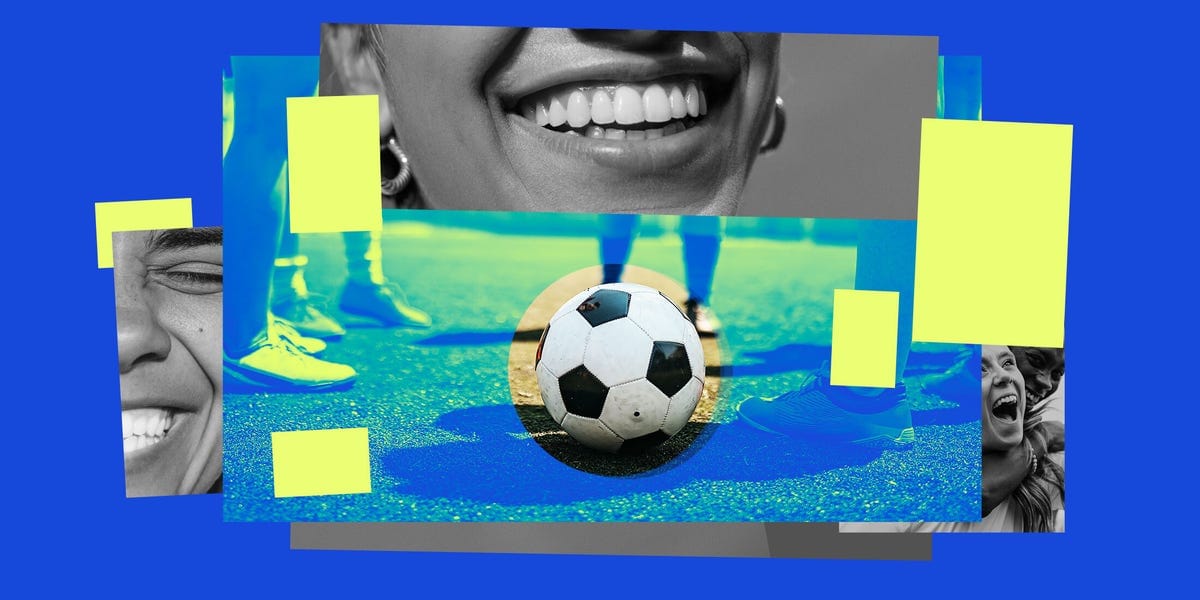
Reported by Women's Health Magazine.
Something biochemically distinct happens when the World Cup rolls around. Social media goes feral with anticipation, strangers bond over match schedules, and even casual fans find themselves genuinely, irrationally happy. It turns out that's not a coincidence — it's neuroscience and psychology working in tandem. According to Women's Health Magazine, Google search trend data going back to 2004 shows soccer is the sport most frequently searched alongside the word "happiness" in the U.S. No other sport comes close.
The reasons stack up fast. Colin Armstrong, PhD, health and performance psychologist at Vanderbilt University School of Medicine, points out that soccer is essentially a delivery mechanism for three of the most powerful mood-boosters we know: physical movement, social connection, and time outdoors. Even as a spectator, your brain is processing waves of suspense, anticipation, and resolution — and it's "highly responsive" to all of it, Armstrong says. Marcia Edwards, PsyD, sport psychologist at The Ohio State University Wexner Medical Center, adds that the sport's unpredictability is its own kind of drug: one goal can detonate an entire emotional sequence, and those highs hit harder when you're riding them alongside other people.
The Psychology of Collective Joy
There's also a well-documented psychological phenomenon at play called basking in reflected glory — or BIRGing — where fans absorb the wins of their team as personal victories. Kia Afcari, director of Greater Good Workplaces at UC Berkeley's Greater Good Science Center, explains the internal logic simply: "Because I'm associating with winners, I get glory as well." Layer on top of that something called emotional contagion — where group feeling spreads person to person like a lit match — and you've got an environment where a single goal in a packed living room can feel seismic.
At World Cup scale, this compounds into what Edwards calls collective effervescence: the elevated energy that emerges when massive groups share a single experience simultaneously. It's not just your friend group watching — it's the entire planet. Afcari frames it directly: that global participation generates something richer than entertainment, delivering real hits of meaning, identity, and connection that outlast the final whistle. The tournament cuts across cultural lines in ways few events can, and that shared investment is a genuine source of psychological reward.
Whether you're playing, watching from a bar, or just refreshing a score app alone in your apartment, soccer taps something primal and deeply social in us — and the science says leaning into that joy is genuinely good for you.
Read the original at Women's Health Magazine.