A Tick Bite Could Make You Allergic to Meat and Milk—and Cases Are on the Rise
Everything you need to know about alpha-gal syndrome.
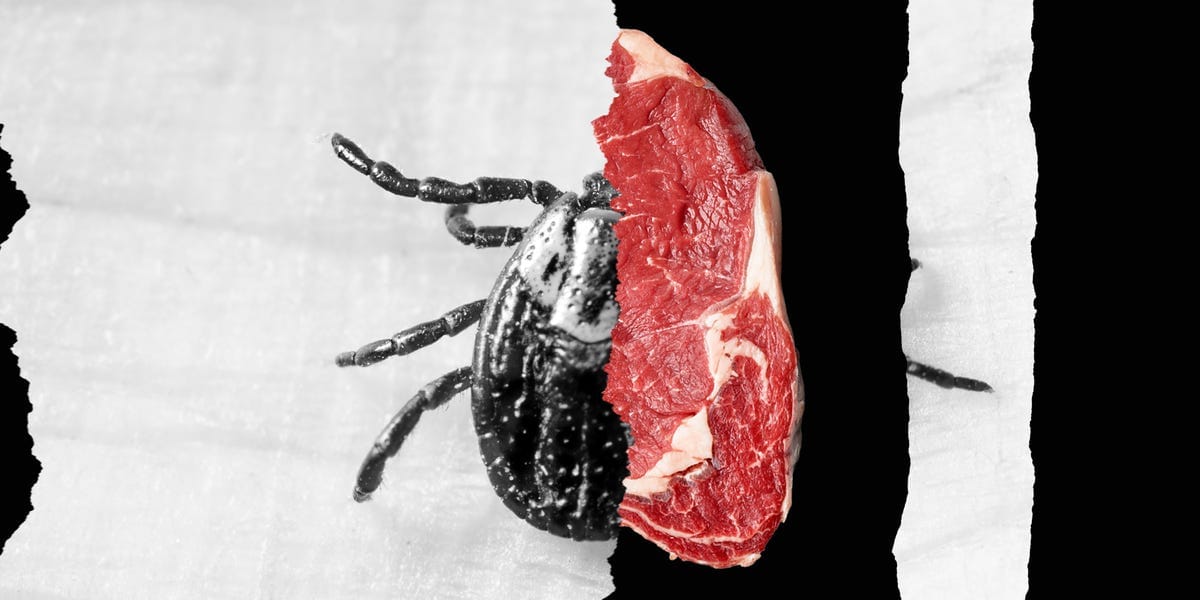
Reported by Women's Health Magazine.
You already know about Lyme disease. But there's another tick-borne condition quietly gaining ground across the U.S. — one that could permanently change what you're able to eat. Alpha-gal syndrome (AGS) is a potentially life-threatening allergy triggered by a single tick bite, and according to Women's Health Magazine, both its reach and its recognition are expanding fast.
Here's the mechanism: the lone star tick carries a sugar molecule called galactose-α-1,3-galactose — alpha-gal — in its saliva. When it bites you, that molecule enters your bloodstream. Your immune system flags it as an invader, and suddenly, every time you consume red meat, dairy, or gelatin — anything derived from mammals — your body treats it like a threat. Reactions range from hives, vomiting, and diarrhea to anaphylaxis. Symptoms typically appear two to six hours after exposure, says Dr. Thomas Russo, professor and chief of infectious disease at the University at Buffalo, which makes the connection easy to miss. Over 110,000 suspected cases were detected between 2010 and 2022 per the CDC — but because AGS isn't nationally reportable, the real number is almost certainly higher.
Why Cases Are Climbing — and What You Can Do
Two factors are driving the rise, according to Dr. William Schaffner, infectious disease specialist at Vanderbilt University School of Medicine: better diagnostics, and the fact that milder winters have allowed lone star tick populations to boom. The species is most concentrated in Southern, Eastern, and Central states, but its range is spreading. "It's anticipated that we will have an abundance of ticks this season," Dr. Schaffner warns. The U.S. Department of Health and Human Services has launched an initiative to investigate protective interventions post-bite, but nothing is available yet. Currently, there is no treatment — only avoidance. Chicken and seafood remain safe; everything else mammal-derived is off the table. Severe reactions require an EpiPen. The one upside: sensitivity may diminish over time if you avoid further bites, Dr. Schaffner notes.
Prevention is your best tool. Use DEET-based repellent on skin and permethrin — an insecticide — on clothing only (spray, let dry, then wear). In tick-prone areas, wear long pants tucked into socks and light-colored fabrics so hitchhikers are easier to spot. When you're back inside, do a full-body check: ticks favor warm, hidden spots — hairline, underarms, behind the knees, waistband, genitals. If you start noticing strange reactions after eating meat or dairy, don't dismiss it. A blood test checking for alpha-gal antibodies can confirm a diagnosis.
A tick the size of a sesame seed can quietly reshape your entire relationship with food — and the more time you spend outside this season, the more that's worth taking seriously.
Read the original at Women's Health Magazine.